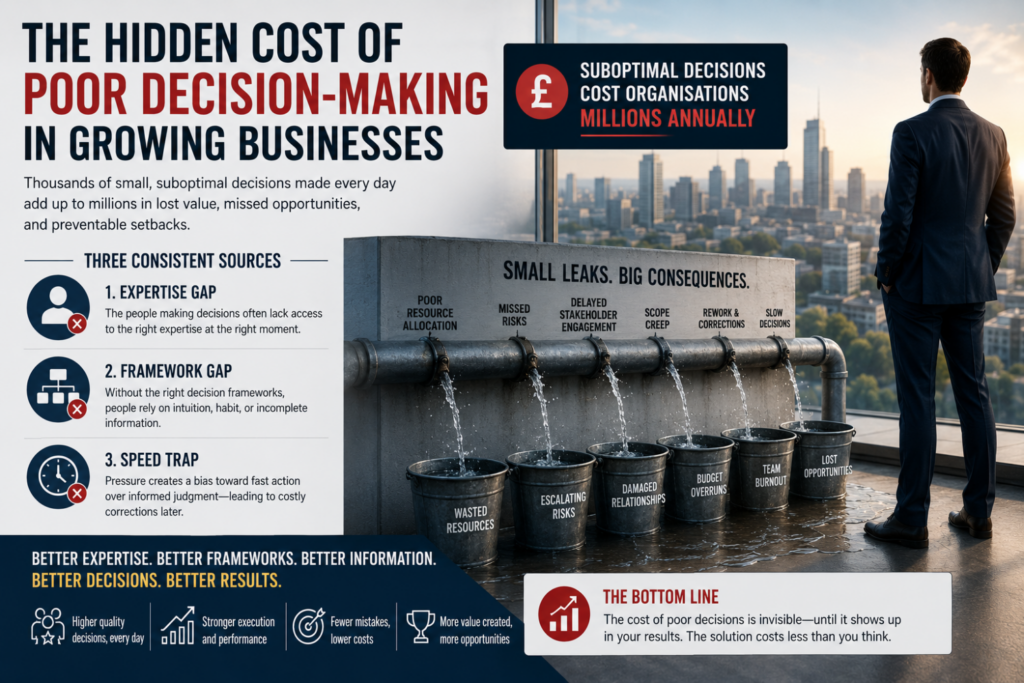
There is a number that organisations rarely calculate and almost never discuss publicly. It is the cost of poor decision-making – not the cost of the obviously wrong decisions that become visible after the fact, but the cumulative cost of the thousands of small, suboptimal decisions made every day by people who do not have access to the right expertise at the right moment.
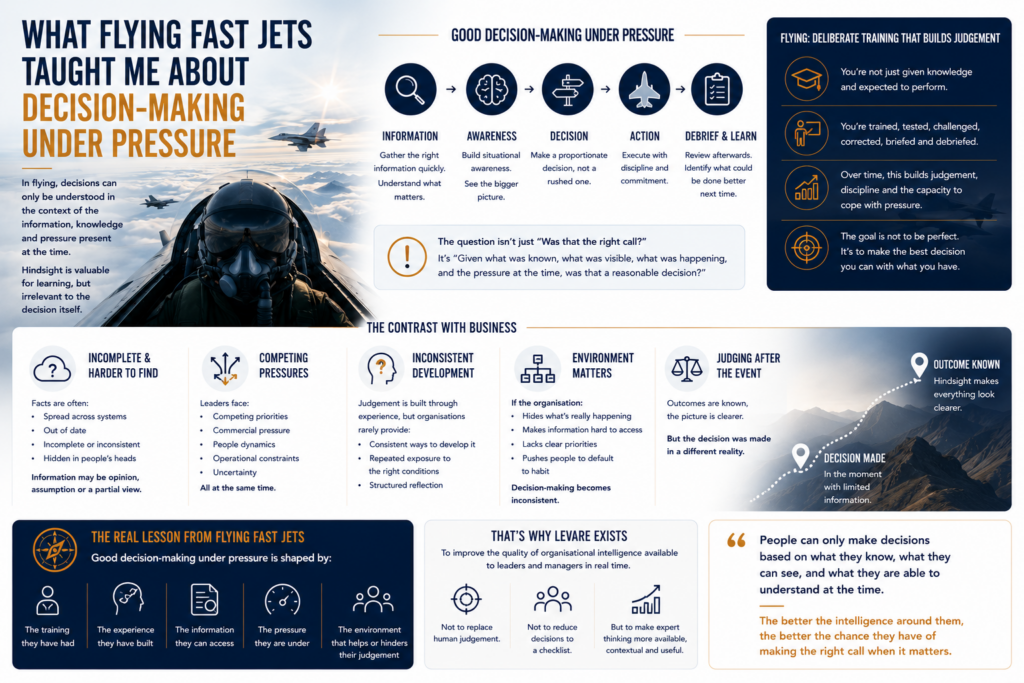
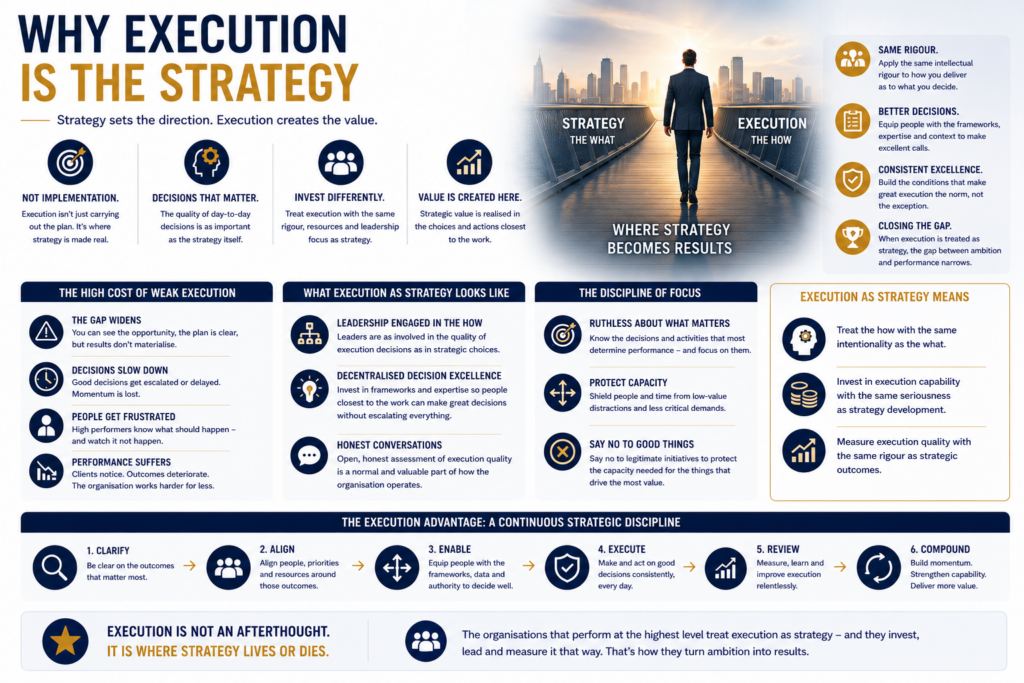
I have spent my career working on complex, sometimes mission-critical programmes across multiple continents. In that time, I have observed a consistent pattern: the decisions that most determine whether outcomes succeed or fail are not the big strategic calls made by executives or senior leaders at the outset. They are the dozens of operational decisions made throughout delivery – about resource allocation, risk management, stakeholder engagement, scope control, and escalation – by people who are often making those calls without sufficient grounding in what good looks like.
The individual cost of each of these suboptimal decisions is often small and unnoticed by many, except those with enough “battle-scars” to recognize a cascading problem.. A slightly wrong resource allocation here. A risk left unaddressed for a few weeks longer than it should have been there. A stakeholder conversation that happened too late, or in the wrong order, or without the right framing. None of these, in isolation, looks significant. Cumulatively, they determine outcomes.
The research on the cost of poor decision-making in business is more sobering than most organisations acknowledge. Conservative estimates suggest that suboptimal decisions across a mid-sized organisation cost the equivalent of several percentage points of revenue annually – a figure that, when translated into actual money, typically runs into the millions.
This figure does not capture what is perhaps the most significant cost of all: the opportunity cost of the decisions that were not made, the initiatives that were not pursued, and the value that was not created because the organisation was absorbing the consequences of decisions that could have been better.
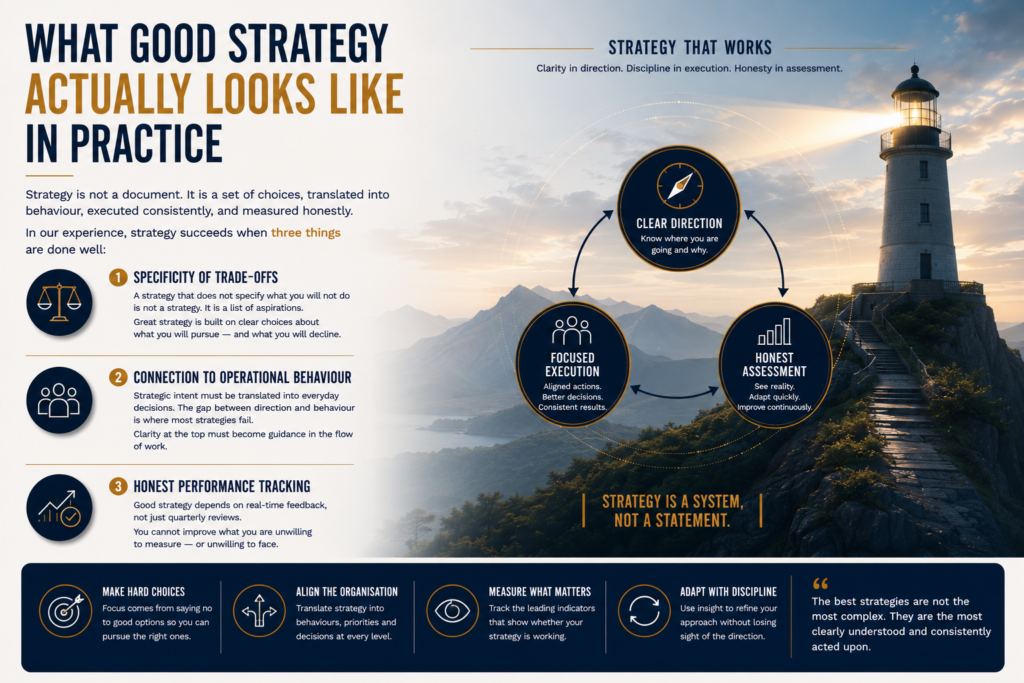
The three most consistent sources of poor decision-making that I have observed, across projects, programmes and organisations of every size, are worth naming precisely.
The Expertise Gap
The first is the expertise gap at the point of decision. In most organisations, the people with the deepest expertise in a given domain are not the people making most of the decisions in that domain. They are in meetings, managing upward, or working on the problems that have already become critical. The people making the day-to-day decisions – the team leads, the middle managers, the practitioners responsible for execution – often lack access to the contextual understanding that would improve the quality of their choices.
The Framework Gap
The second is about the framework gap. Good decision-making is not primarily about intelligence or effort. It is about having the right frameworks and guidance available at the moment of decision – the ability to know what questions to ask, what signals to weight, and what response that a type of situation typically calls for. These frameworks and their tailoring take years to develop through experience. In their absence, decisions are made on intuition, habit, or the most recent information available – which is rarely the most relevant information.
The Speed Trap
The third is the speed trap. Organisations under pressure tend to make decisions faster than the quality of the available information warrants. The urgency of execution creates a bias toward action that overrides the discipline of thinking carefully about what the right action actually is. The result is a pattern of decisions that are fast, confident, and frequently wrong – followed by the expensive process of correcting them after the fact.
However, the opposite can also become true, with executives being provided too much information. There is not enough clarity on what the important measures are, with the rest of the data becoming a monumental distraction.
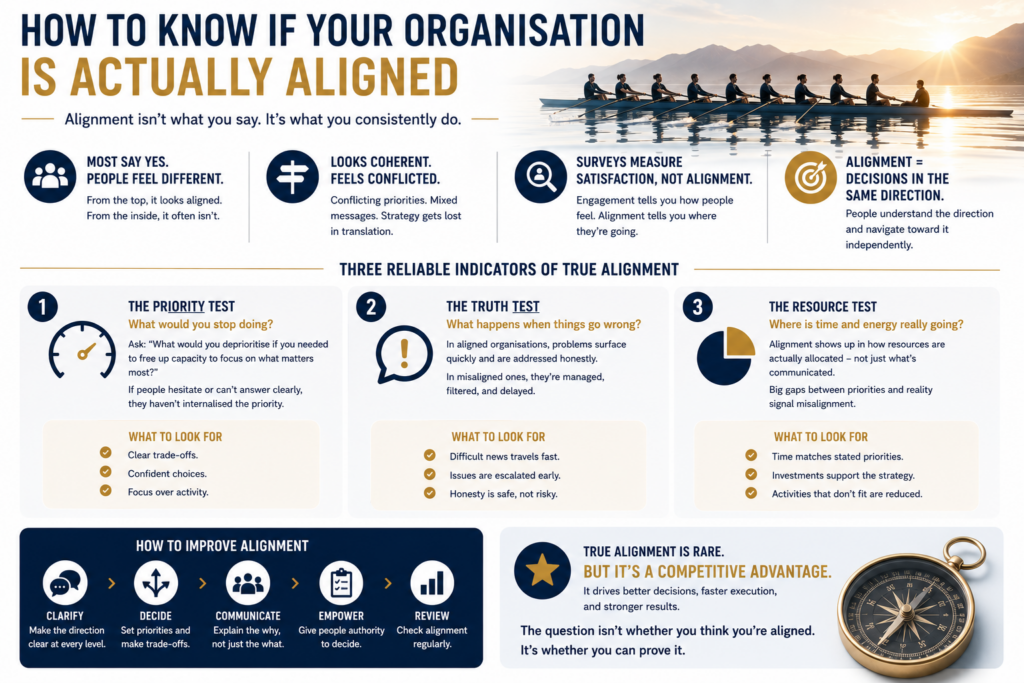
Addressing these three sources requires more than training or process improvement. It requires building the conditions in which better expertise, better frameworks, and better information are consistently available to the people making the decisions that matter. The cost of not doing so is significant. However, the cost of doing it right, is substantially lower than most organisations assume.
Organisational intelligence starts with better understanding.
Interested in early platform access or receiving insights on leadership, performance and contextual intelligence – along with updates on the Levare platform.