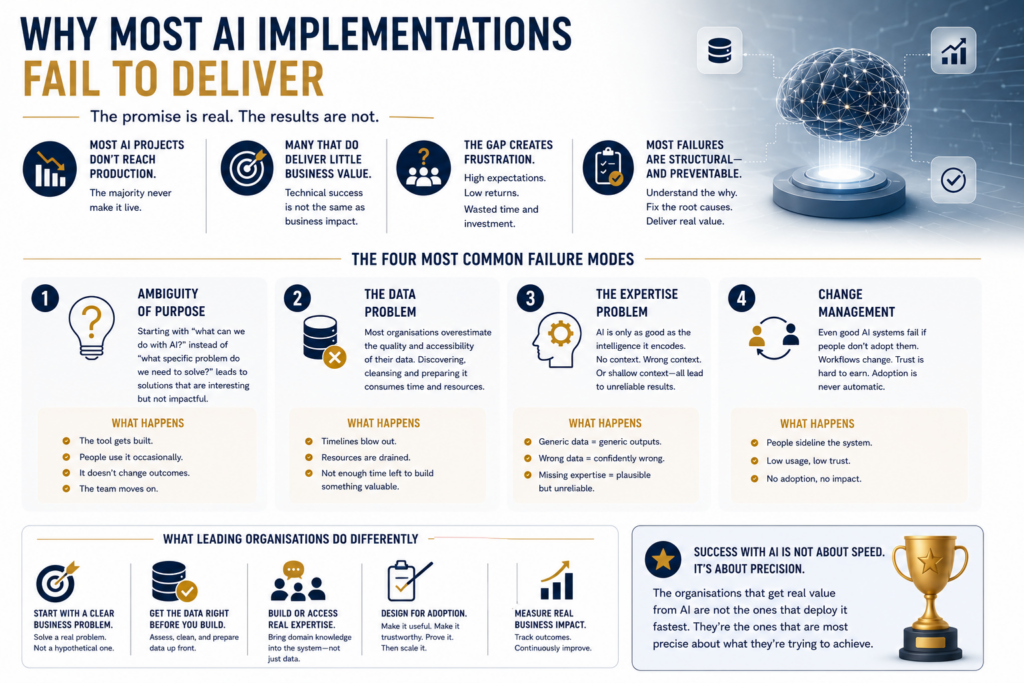
The headlines about artificial intelligence in business tend to follow a predictable pattern. A large language model produces an impressive output. A consultancy publishes a report predicting that AI will transform an industry. An organisation announces a generative AI pilot. Six months later, the pilot quietly ends without scaling.
This pattern is not a coincidence. It reflects something important about the gap between what most AI tools are designed to do and what organisations actually need.
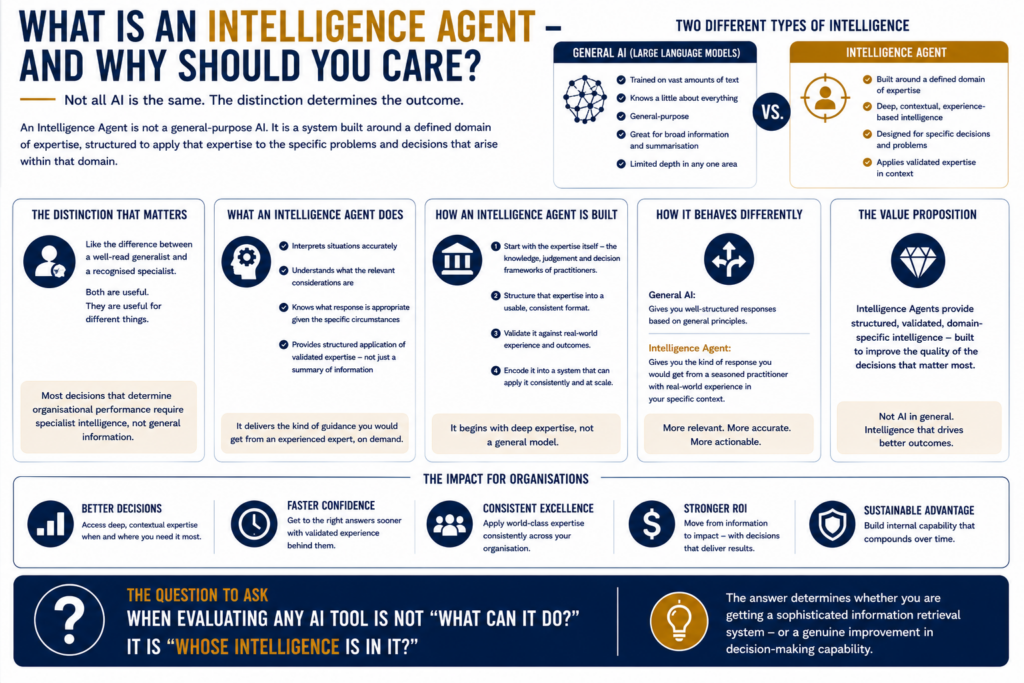
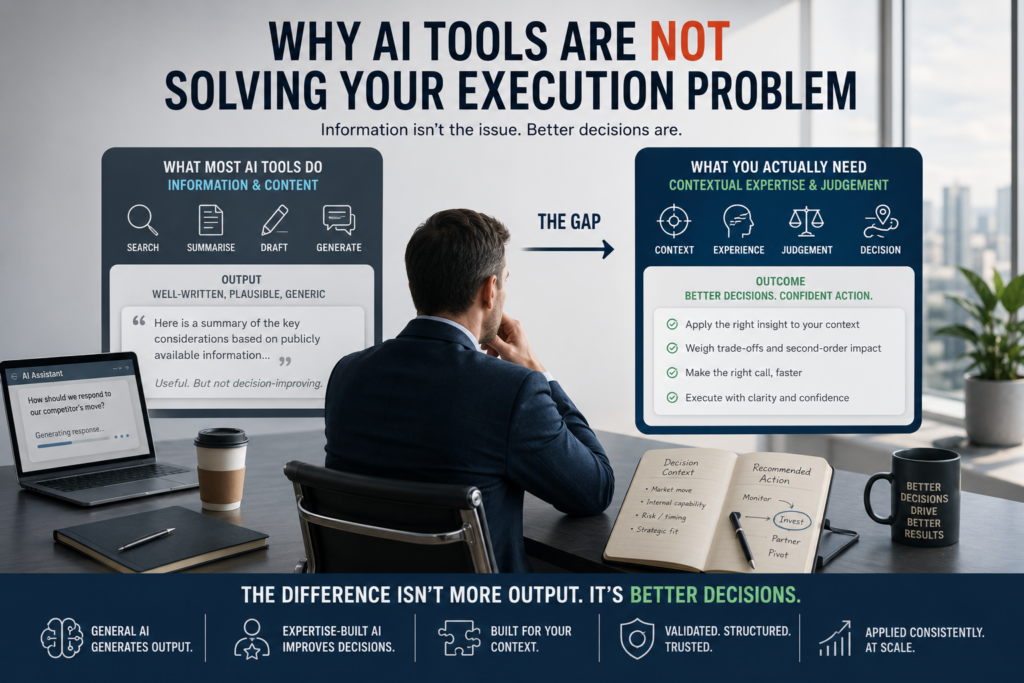
Most AI tools available to businesses today are, at their core, information retrieval and content generation systems. They are extraordinarily good at synthesising information from large datasets and producing fluent, plausible output at speed. These are genuinely useful capabilities. They reduce the time it takes to draft a document, summarise a report, or search across a large body of text.
What they do not do is improve the quality of the decisions being made by the people using them.
This distinction matters enormously in practice. The challenge most organisations face is not a shortage of information. It is a shortage of the contextual understanding needed to act on that information correctly. A leader trying to decide whether to restructure a division, how to respond to a competitor’s move, or whether a project is genuinely on track does not need more data. They need the kind of structured, experience-based judgement that comes from having seen similar situations play out dozens of times.
That is not what a generative AI tool provides. What it provides is a well-written summary of publicly available thinking on the subject – which is a very different thing.
The problem is compounded by how most AI implementations are structured. Organisations buy access to a general-purpose model and ask their teams to find uses for it. Some do. Many find that the outputs are useful for low-stakes tasks but not for the decisions that actually matter – where the cost of a wrong call is high and where generic, hedged, probabilistic output is worse than no output at all.
This is not a failure of the technology. It is a failure of fit. General-purpose AI tools are built for general purposes. They are not built for the specific, contextual, high-stakes decision environments that business leaders actually operate in.
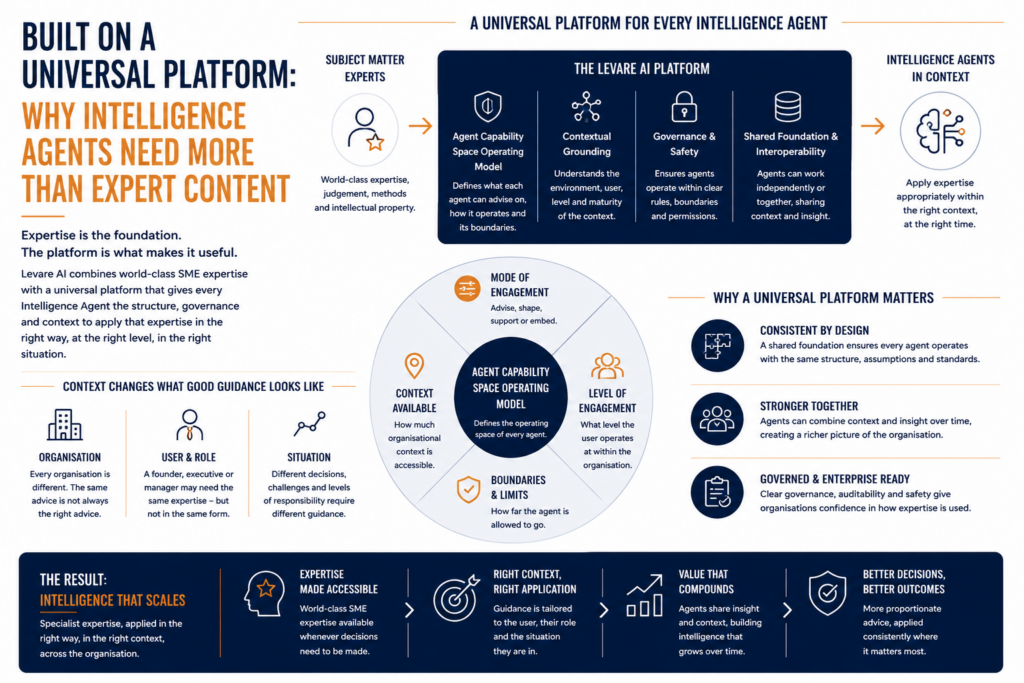
The organisations that are quietly getting the most value from AI are not the ones deploying the largest or most sophisticated general models. They are the ones that have found ways to apply structured, domain-specific intelligence to specific problems – where the inputs are well-defined, the expertise behind the system is genuine, and the outputs are actionable rather than merely plausible.
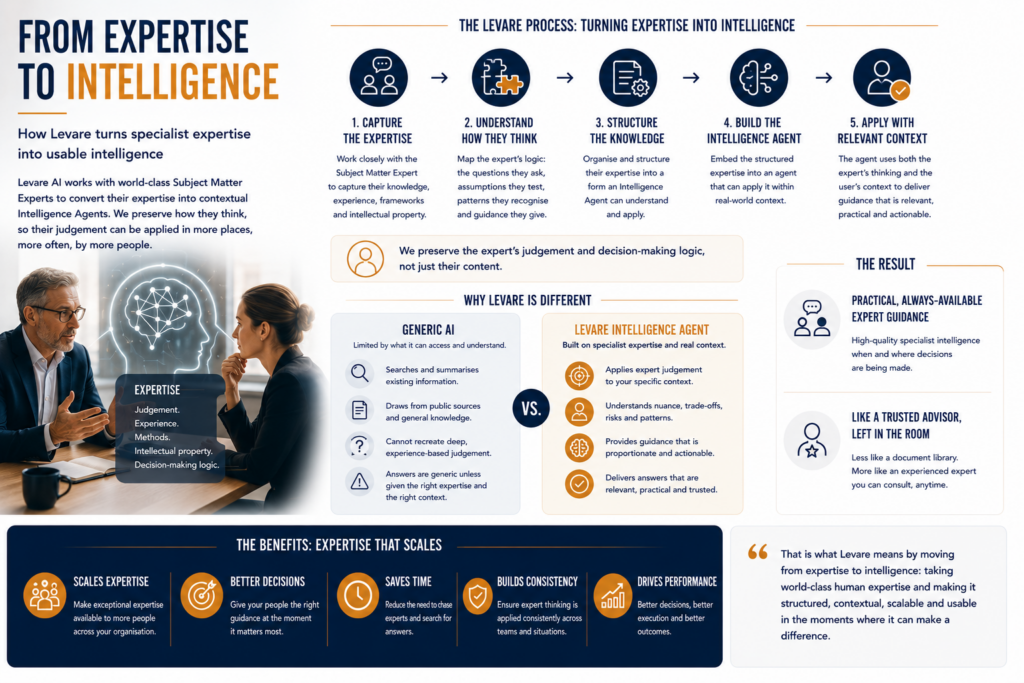
This requires a fundamentally different approach to how AI is built and deployed. Instead of starting with a general model and asking what it can do, it starts with a specific problem, identifies the expertise needed to address it, and structures that expertise into a system that can apply it consistently and at scale.
The result is not a chatbot. It is not a content generator. It is something closer to having a recognised expert available on demand – one whose knowledge has been structured, validated, and made accessible in the specific context where it is needed.
This is the difference between AI that generates output and AI that improves decisions. The former is useful. The latter is transformational. And right now, most organisations are getting the former while hoping for the latter.
Closing that gap requires being precise about what the problem actually is – and choosing tools that are built to solve it.
Organisational intelligence starts with better understanding.
Interested in early platform access or receiving insights on leadership, performance and contextual intelligence – along with updates on the Levare platform.