Ask a hundred business leaders what high performance looks like in an organisation and you will get a hundred different answers. Productivity. Revenue growth. Employee engagement scores. Customer satisfaction ratings. The ratio of output to headcount.
These are not wrong answers. They are just incomplete ones. They describe the results of high performance without describing the conditions that produce it. And organisations that focus on results without understanding the conditions that generate them tend to build strategies that cannot be reliably reproduced.
So what does it actually mean to be a high-performance organisation?
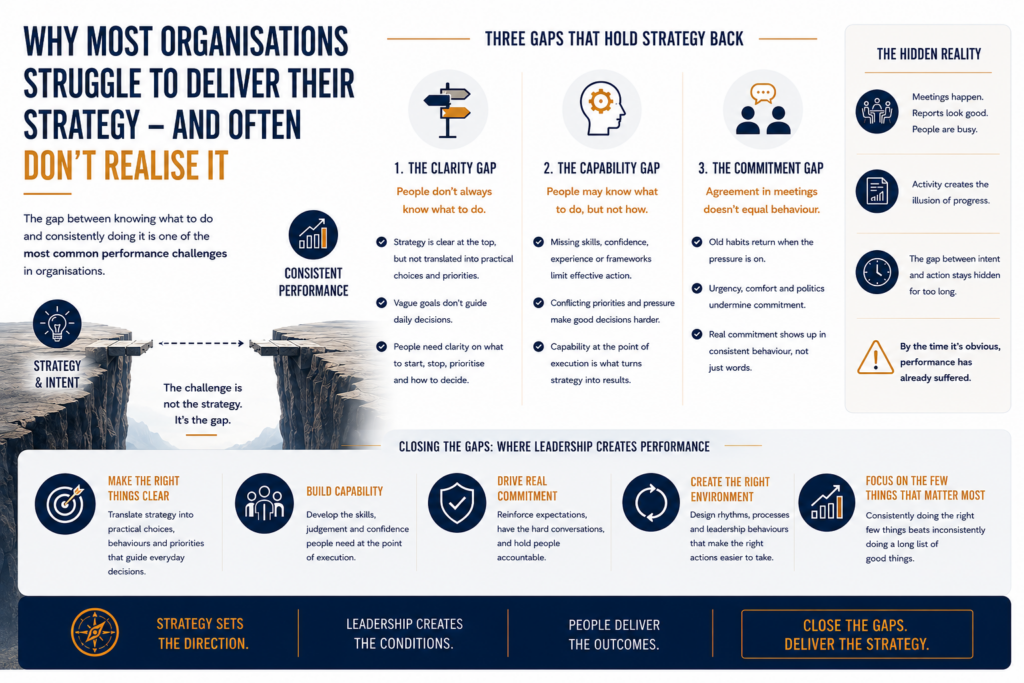
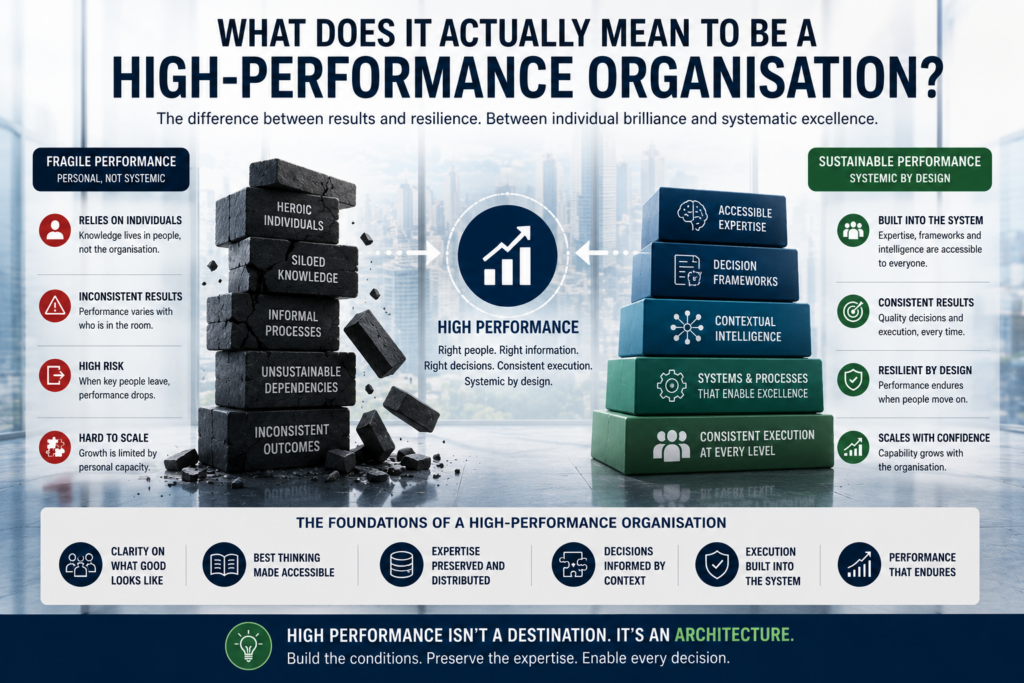
The most useful definition is also the most demanding one. A high-performance organisation is one where the right people have the right information, make the right decisions, and execute on them consistently – not because they are unusually talented or fortunate, but because the organisation has built the systems, structures, and intelligence that make this the default rather than the exception.
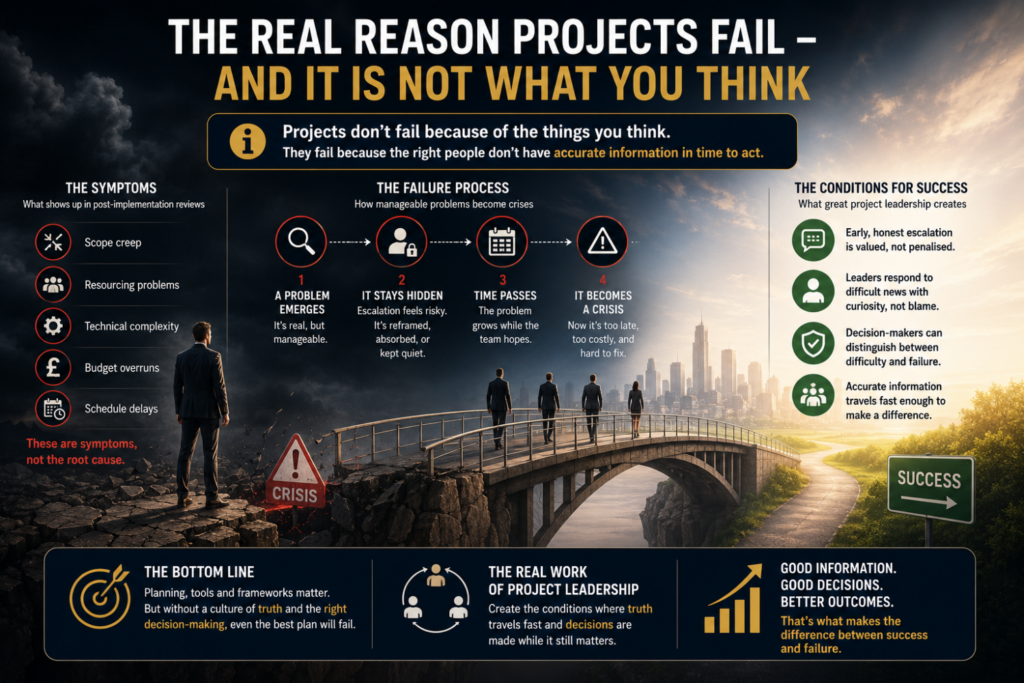
That last clause is important. In many organisations, high performance is individual rather than systemic. It depends on specific people being in specific roles, on relationships and informal knowledge that have accumulated over years, on the judgement of a handful of leaders whose departure would expose how much of the organisation’s capability is personal rather than institutional.
This kind of performance is fragile. It does not scale. And it creates a specific type of risk that most organisations dramatically underestimate – the risk that the departure of one or two key people changes the performance trajectory of the entire business.
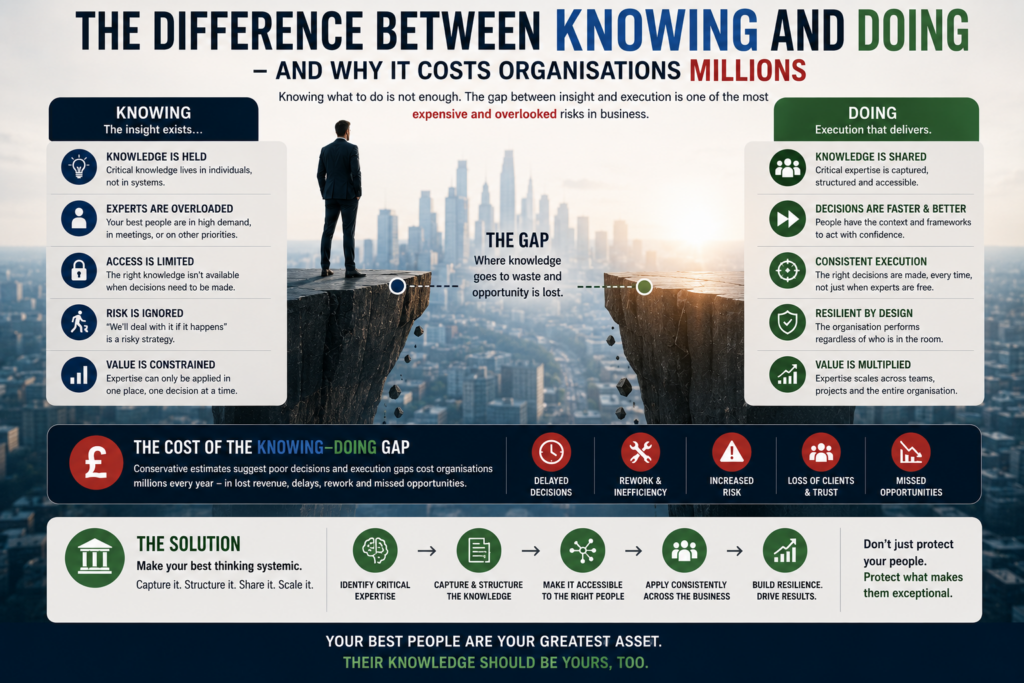
A genuinely high-performance organisation is one that has made its best thinking systemic. The expertise that used to live in individuals has been structured and made accessible. The decision frameworks that experienced leaders apply intuitively have been codified and made available to the people who need them. The contextual intelligence that separates excellent execution from average execution is embedded in how the organisation actually operates – not reserved for those who happen to have acquired it through years of experience.
This is a harder thing to build than most organisations realise. It requires being honest about where performance is genuinely systemic and where it is personal. It requires identifying the expertise that is most critical to the organisation’s success and finding ways to preserve and distribute it before it walks out of the door. And it requires resisting the temptation to define performance by outputs alone, without asking the harder question of whether those outputs would survive the departure of the individuals currently producing them.
The organisations that build this kind of systemic capability share a number of characteristics. They are clear about what good looks like in every critical function – not just in general terms, but specifically enough that the standard can be applied consistently. They invest in making their best thinking accessible rather than keeping it locked inside the heads of their most experienced people. And they have an honest answer to the question that every board and leadership team should be asking: if our three most capable people left tomorrow, what would happen to our performance?
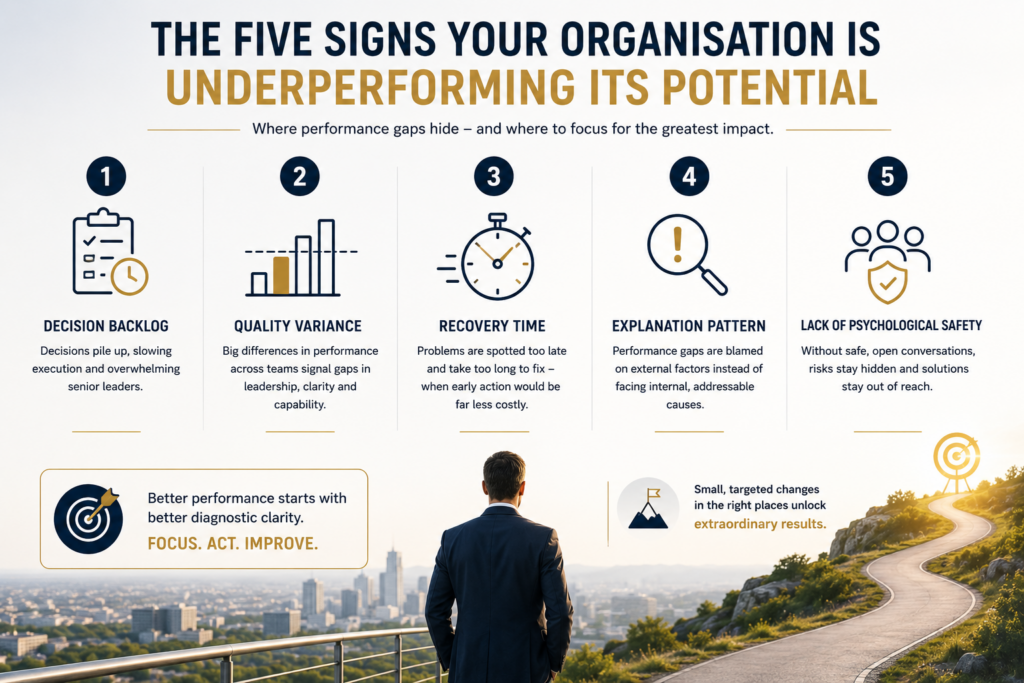
If the answer is uncomfortable, that discomfort is information. It is telling you that performance is more personal than systemic – and that the organisation is more fragile than it appears from its current results.
High performance is not a destination. It is a set of conditions – conditions that need to be actively built and maintained. The organisations that understand this are the ones that perform consistently over time, regardless of who is in which role. The ones that do not tend to perform well right up until the moment they do not.
The difference between the two is not talent. It is architecture.
Organisational intelligence starts with better understanding.
Interested in early platform access or receiving insights on leadership, performance and contextual intelligence – along with updates on the Levare platform.