There is a particular kind of frustration that high-performing people experience in organisations with strong strategies and weak execution. It is the frustration of knowing exactly what needs to happen and watching it consistently not happen – of understanding the direction clearly enough to see the gap between where the organisation is and where it could be, and of lacking the mechanisms to close that gap effectively.
I have spent years working with organisations on exactly this problem. And the observation that has shaped my thinking most profoundly is this: execution is not the implementation of strategy. Execution is strategy.
The distinction matters because it changes what you invest in and where you focus attention. If you think of execution as implementation – as the operational dimension of a strategic choice made elsewhere – you tend to underinvest in it, deprioritise it relative to the strategy work that generated the direction, and hold the people responsible for it to a lower standard of intellectual rigour than those who work on strategy.
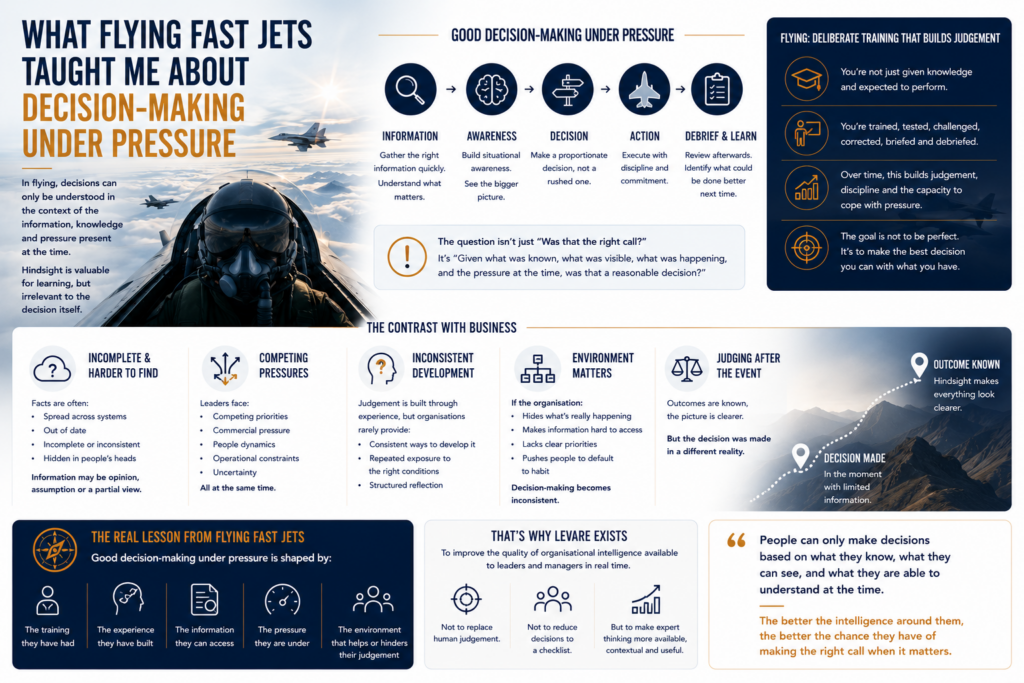
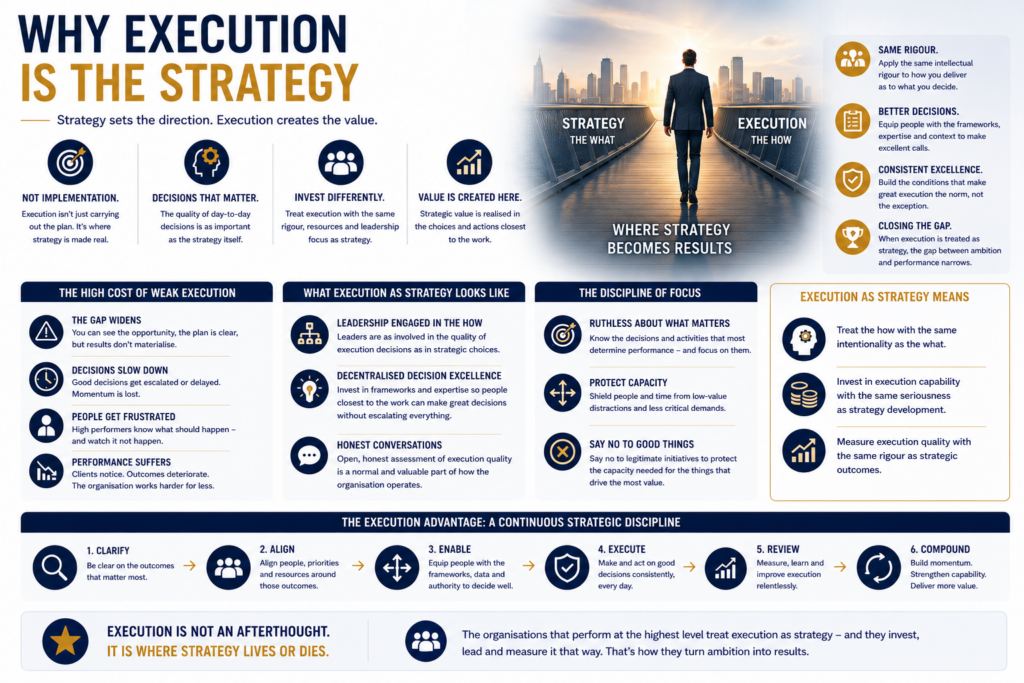
If you think of execution as strategy – as the domain in which strategic choices are made real and strategic value is actually created – you invest in it differently. You recognise that the quality of day-to-day decisions, made by the people closest to the work, is as consequential as the quality of the strategic planning that shapes the direction. You develop the frameworks and expertise that make those decisions better. And you build the conditions that allow excellent execution to be consistent rather than exceptional.
The organisations that perform at the highest level are those that have made this conceptual shift – not in their strategic documents, but in how they actually allocate attention, resource, and leadership energy. They treat the how of delivery with the same rigour they apply to the what.
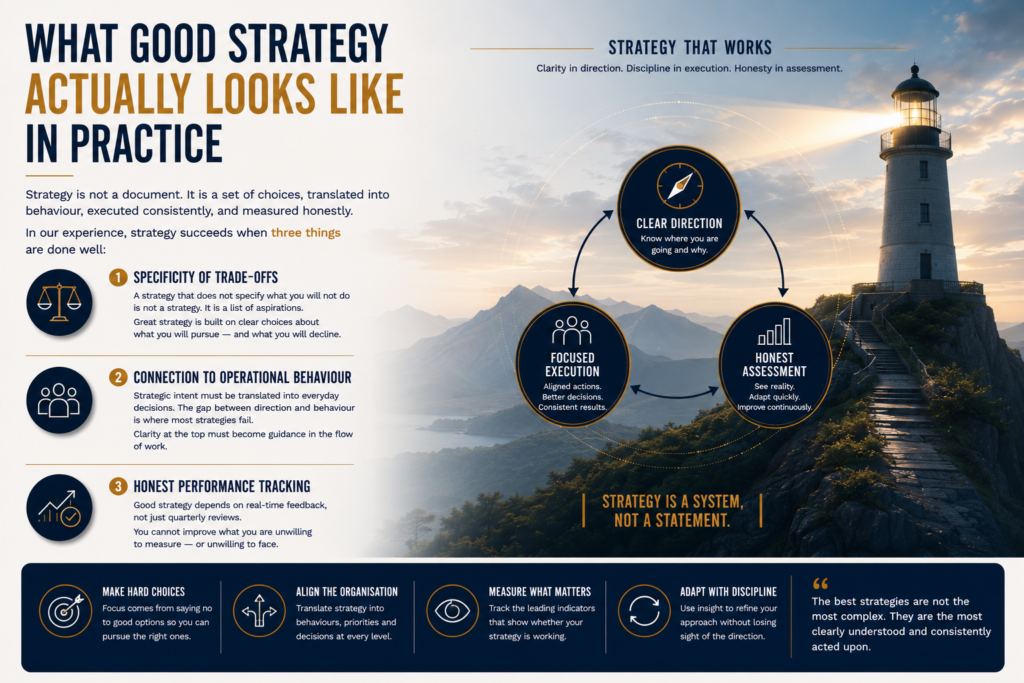
What does this look like in practice? It looks like leadership that is as engaged in the quality of execution decisions as it is in the quality of strategic choices. It looks like investment in developing the decision-making frameworks and contextual expertise that allow people at the operational level to make consistently good calls without escalating everything to the centre. And it looks like a culture in which the honest assessment of execution quality – of whether things are being done as well as they could be – is a normal and welcome part of how the organisation operates.
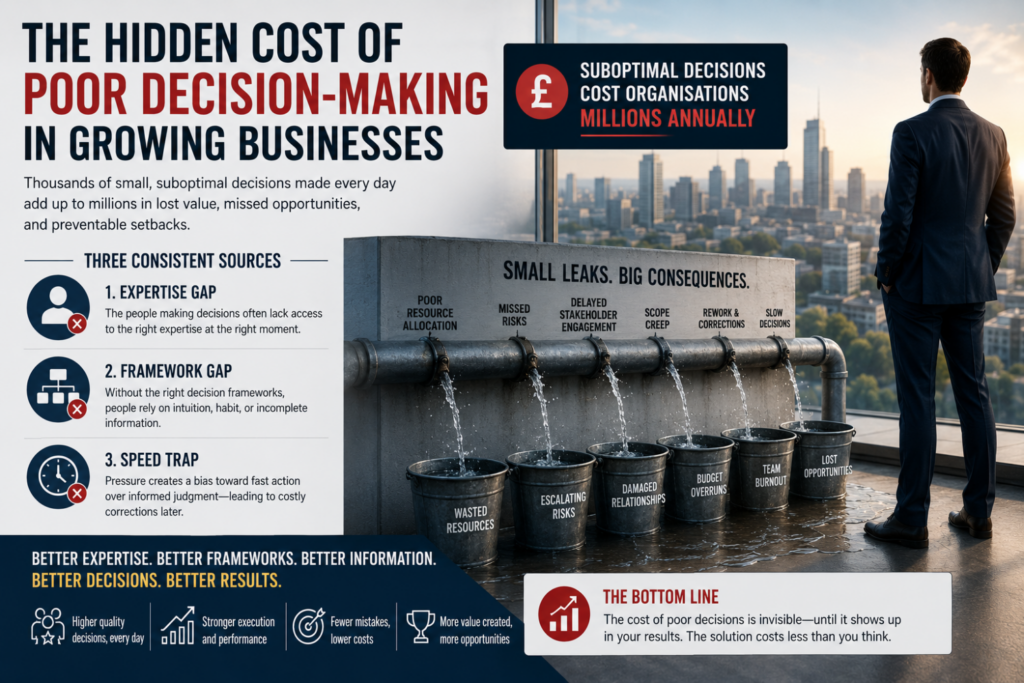
It also looks like a specific kind of discipline around what matters most. One of the most consistent patterns I observe in organisations that execute well is that they are ruthless about focus. They have a clear understanding of the decisions and activities that most determine their performance, and they protect the capacity of the people responsible for those decisions and activities from the accumulating weight of less critical demands.
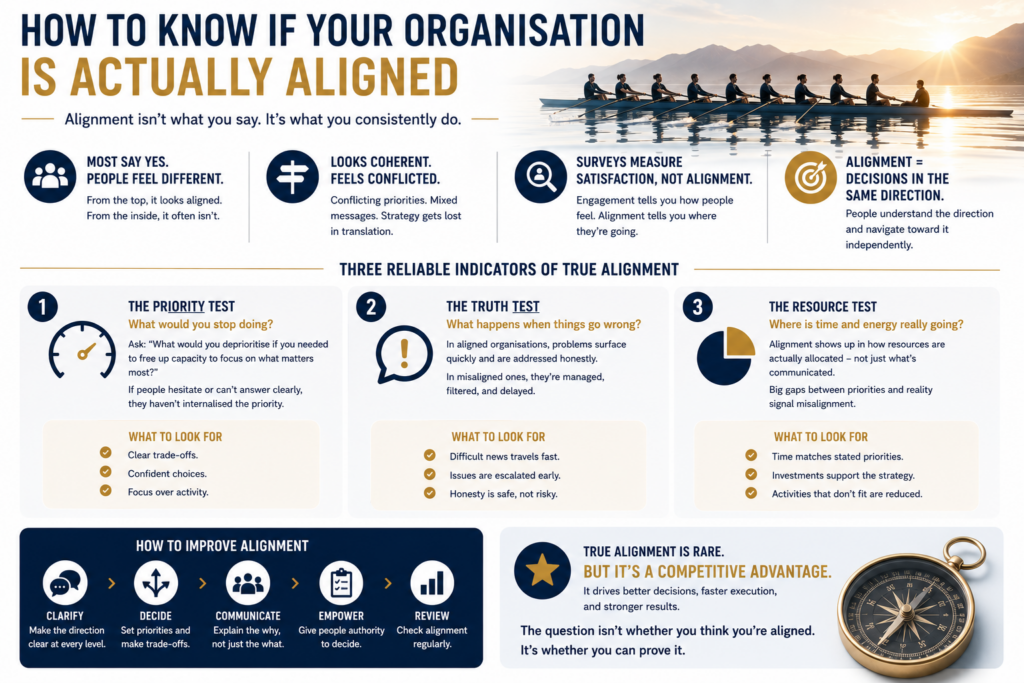
This sounds obvious. It is, in practice, surprisingly rare. Most organisations have a stated set of priorities and an actual allocation of time and attention that is considerably broader and more diffuse. The gap between the two is one of the most consistent sources of execution underperformance I encounter.
Closing it requires leadership discipline that is harder to sustain than most frameworks acknowledge. It requires saying no to legitimate initiatives and important requests in order to protect the capacity needed to drive the things that matter most. It requires maintaining that discipline under the pressure of urgency – because urgency is the enemy of priority, and organisations under pressure default toward whatever is most urgent rather than whatever is most important.
Execution as strategy means treating the how with the same intentionality that you apply to the what. It means investing in execution capability with the same seriousness that you invest in strategy development. And it means measuring the quality of execution with the same rigour that you apply to the assessment of strategic outcomes.
The organisations that make this shift find that the gap between their strategic ambition and their delivered performance narrows considerably. Not because the strategy was wrong, but because the execution finally received the investment it deserved.
Organisational intelligence starts with better understanding.
Interested in early platform access or receiving insights on leadership, performance and contextual intelligence – along with updates on the Levare platform.