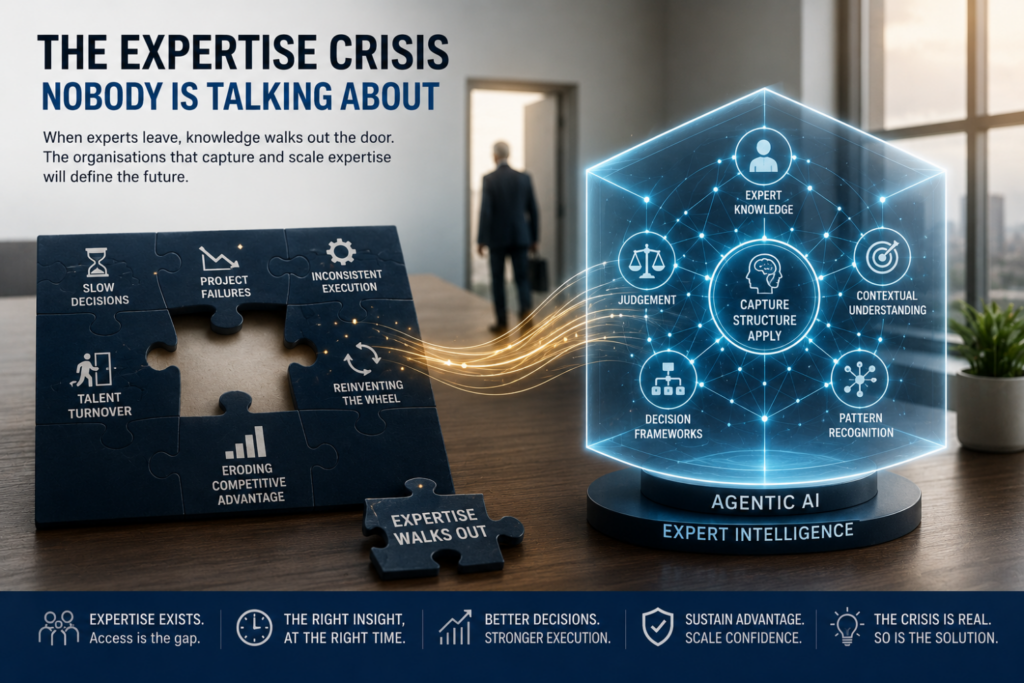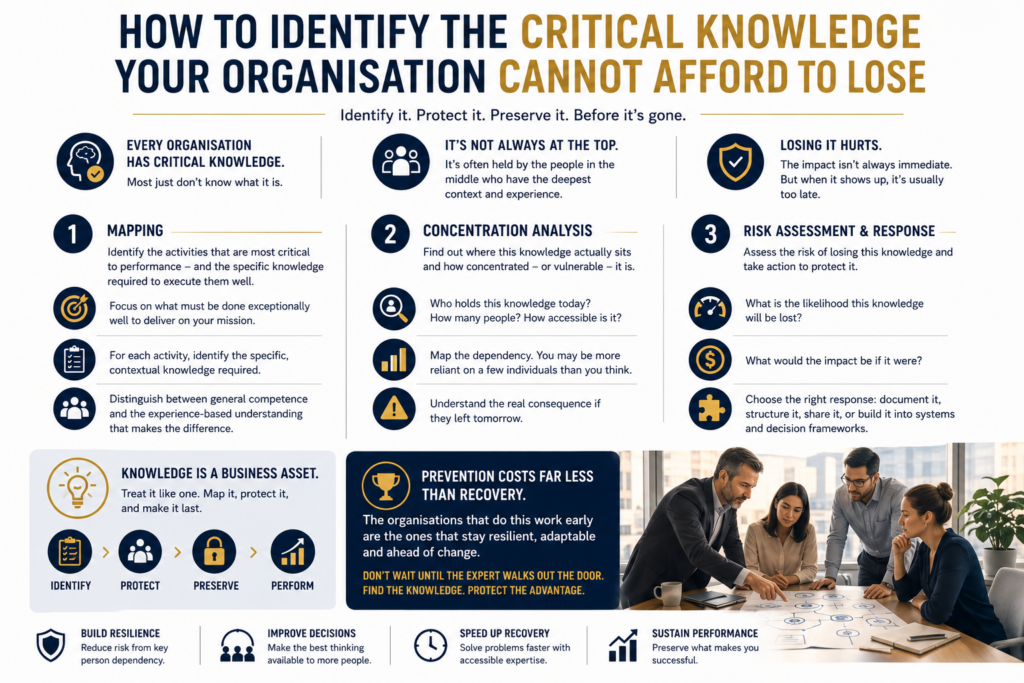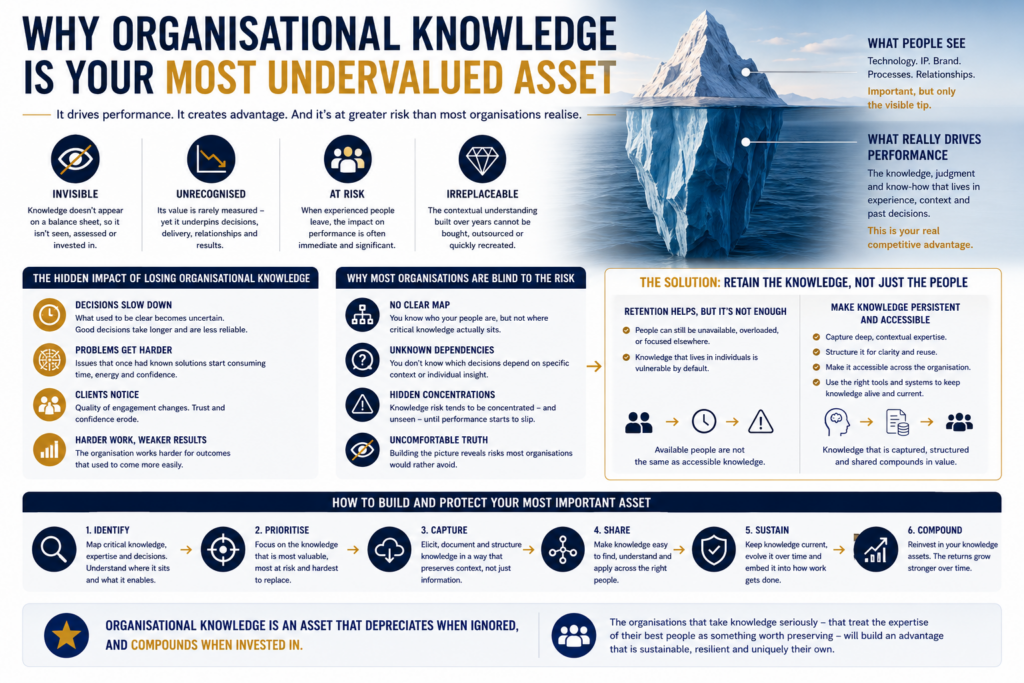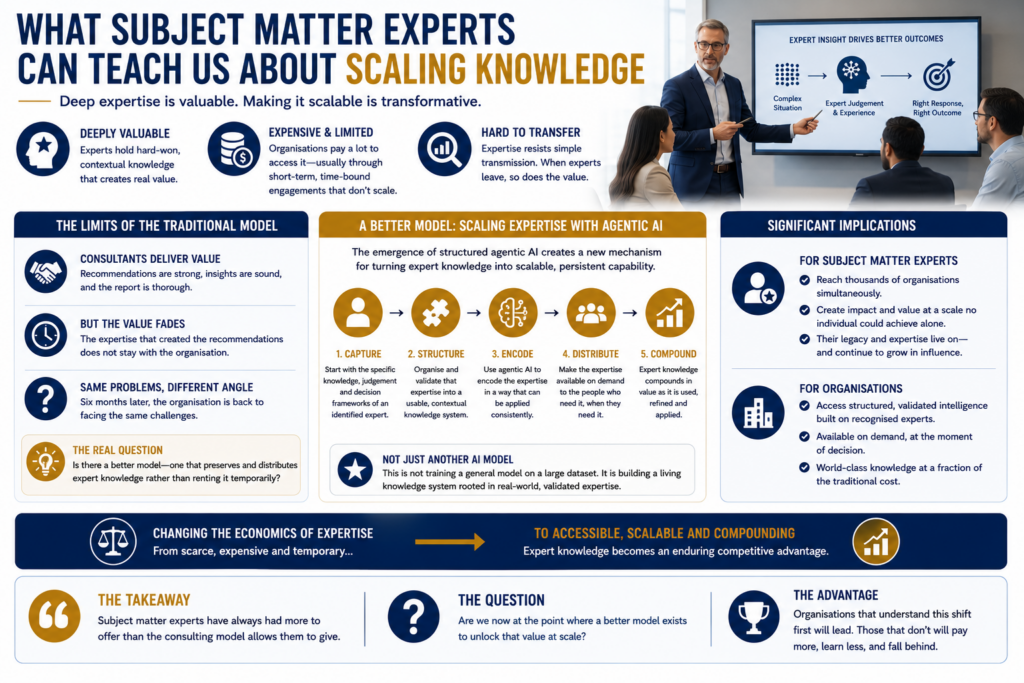
There is a category of knowledge that organisations consistently undervalue – the kind held by people who have spent decades becoming genuinely excellent at something specific.
Subject matter experts – practitioners with deep, contextual, real-world expertise in a defined domain – represent one of the most underleveraged resources in the business world. Their knowledge is valuable. Their judgement is hard-won. Their ability to see patterns in complex situations, to know what works and what does not in specific contexts, to apply the right response to the right problem at the right moment – these are capabilities that organisations pay significant sums to access, usually through consulting arrangements that are expensive, time-limited, and do not scale.
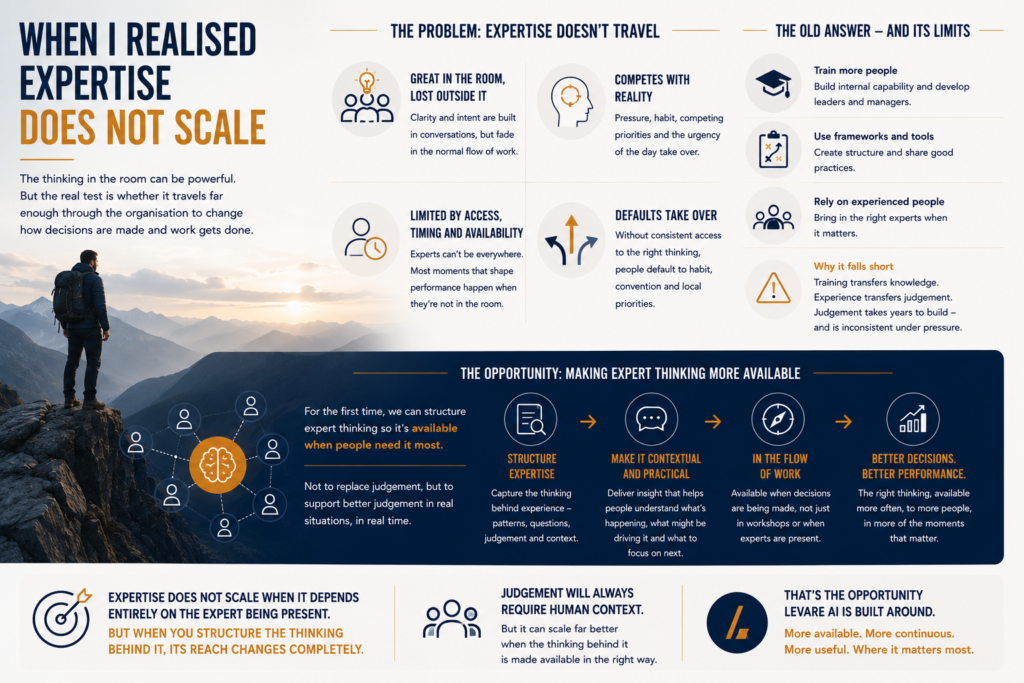
The fundamental challenge with expert knowledge is that it does not transfer easily. It can be described in general terms. It can be shared in conversations and workshops. It can be documented in reports and frameworks. But the specific, contextual, experience-based intelligence that makes an expert genuinely valuable – the ability to read a situation accurately and know what to do – tends to resist straightforward transmission.
This is why organisations that bring in excellent consultants often find that the value of the engagement fades after the consultants leave. The recommendations were good. The report was thorough. But the expertise that generated them did not stay. And six months later, the organisation is facing the same problems from a slightly different angle.
The question this raises is whether there is a better model – one that preserves and distributes expert knowledge rather than renting access to it temporarily.
The answer to this question has changed materially in the last few years. The emergence of structured agentic AI creates, for the first time, a genuine mechanism for converting the expertise of subject matter experts into something that is persistent, scalable, and accessible on demand.
This is not the same as training a general model on a large dataset. It is a fundamentally different process – one that starts with the specific knowledge, judgement, and decision frameworks of an identified expert, structures that expertise into a form that can be applied consistently in context, and makes it available to the people who need it at the moment they need it.
The implications for subject matter experts themselves are significant. For the first time, their knowledge does not have to be delivered through their personal presence. It can reach thousands of organisations simultaneously, applied to the specific situations those organisations face, generating value at a scale that no individual practitioner could achieve through conventional consulting.
For organisations, the implication is equally significant. Instead of renting access to expertise for a defined period and losing it when the engagement ends, they can access structured, validated intelligence built on the knowledge of recognised practitioners – on demand, at the moment of decision.
This changes the economics of expertise substantially. It makes world-class knowledge accessible to organisations that could never afford to retain the practitioners who hold it. And it creates a mechanism for expert knowledge to compound in value over time rather than being consumed and lost.
The organisations that understand this shift earliest will have a meaningful advantage over those that continue to operate in a world where expertise is scarce, expensive, and temporary.
Subject matter experts have always had more to offer than the consulting model allows them to give. The question is whether we are now at the point where a better model exists to unlock that value at scale.
Organisational intelligence starts with better understanding.
Interested in early platform access or receiving insights on leadership, performance and contextual intelligence – along with updates on the Levare platform.