People sometimes ask how you go from elite sport and flying fast jets to building an AI company. On the surface, they look like very different worlds, but to me the connection has always been fairly clear. All three are concerned with performance in real environments, where people have to make decisions, work with others, respond to pressure and still deliver.
What those environments taught me is that performance is rarely just about individual ability. Ability matters, of course, but people perform inside an environment. They are shaped by the clarity they have, the support around them, the quality of the conversations, the way decisions are made, the behaviours that are accepted, and the degree to which people understand how their role connects to the wider intent.
That has been the common thread through the organisational work I have been involved in for the last twenty years. Most organisations I meet are not short of effort, ambition or good intent. In fact, they are often full of capable, committed people who want to do a good job. But the environment around them does not always make it easy for that capability and commitment to translate into consistent performance.
That is the gap I kept seeing.
Leaders might have a strategy, teams might be working hard, and people might genuinely care about doing the right thing, but the organisation itself may still not be creating the conditions that allow performance to become consistent. Clarity gets diluted. Priorities compete. Decisions drift. Accountability becomes uneven. Good people start compensating for poor systems, weak handovers, unclear expectations or unresolved tensions.
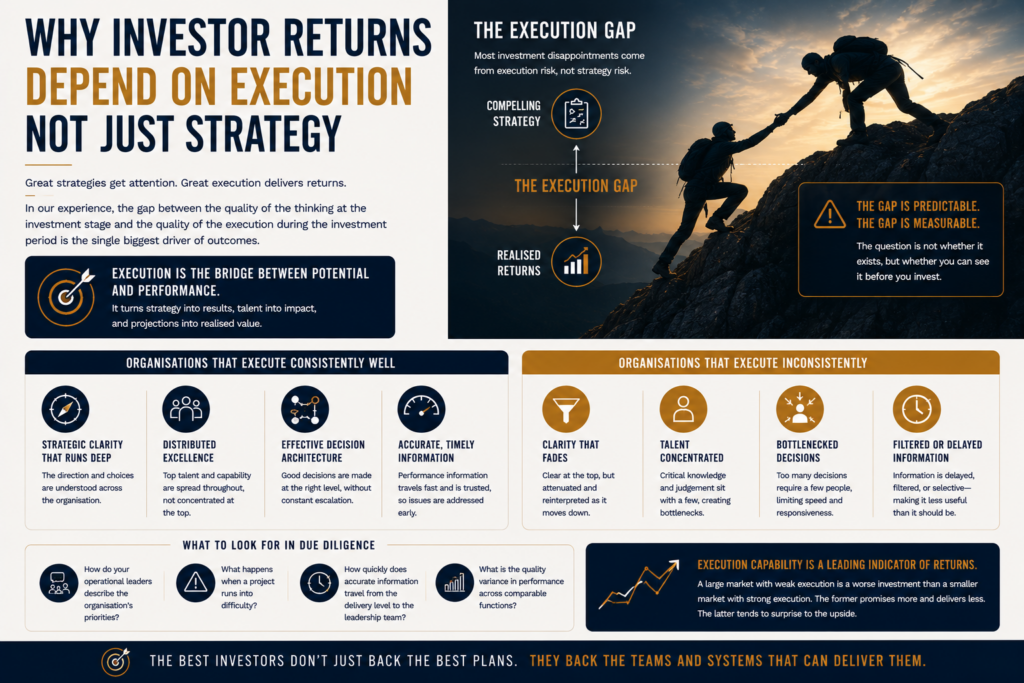
Over time, that became the real question for me: how do you help organisations see those conditions more clearly, understand what is shaping performance, and act on it before the same issues keep repeating themselves?
For years, the only real way to do that was through direct engagement. Through conversations, workshops, coaching, advisory work and the experience of people who could help leaders and managers make sense of what was really going on. That work can be valuable, and I have seen first-hand the difference it can make, but it is naturally limited. It reaches the organisations you are directly working with, at the moments when they have chosen to bring you in.
The problem is that organisational performance is not episodic. It is being shaped all the time, in everyday decisions, conversations, trade-offs and behaviours across the business.
The need for clarity, context and challenge does not only exist in a workshop or a leadership session. It exists in the flow of work, when people are trying to make sense of competing priorities, difficult decisions, team dynamics, operational pressures and the gap between what the organisation says it wants and what is actually happening.
That is where the idea behind Levare came from.
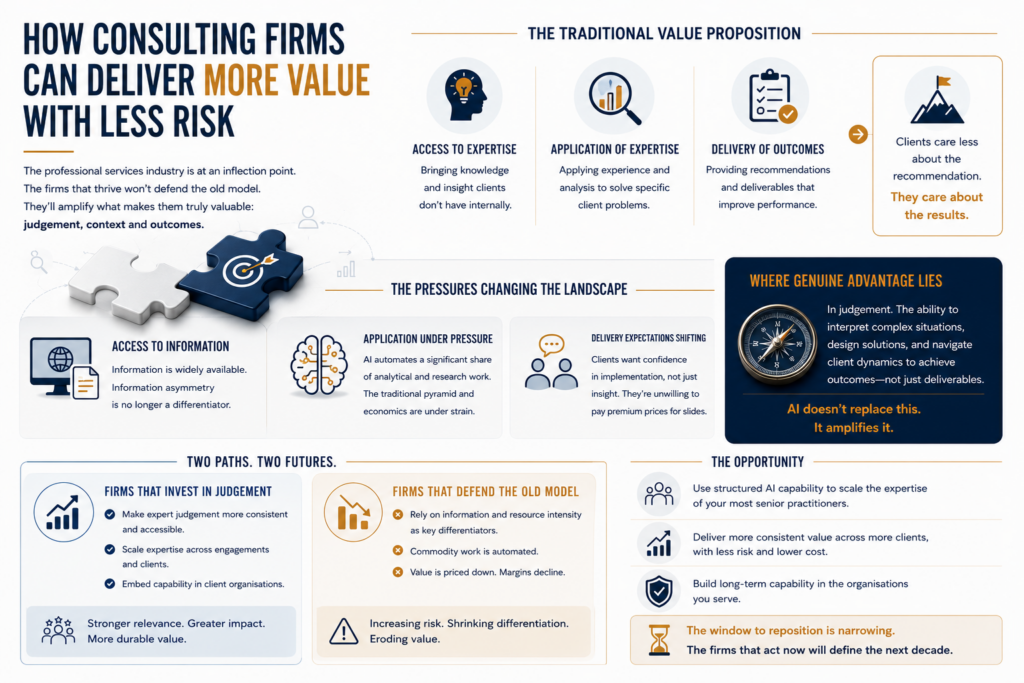
It was never about taking consultancy content and turning it into software. That would be too narrow, and it would miss the point. The real question was whether hard-won organisational performance expertise could be made available in a different form: more continuous, more contextual, and more useful to the leaders and managers who are trying to improve the conditions inside their organisation.
That distinction matters. Levare is not about replacing judgement, experience or leadership. It is about supporting them. It is about giving people access to a way of thinking that helps them understand the organisational dynamics shaping performance, so they can make better decisions and take more useful action.
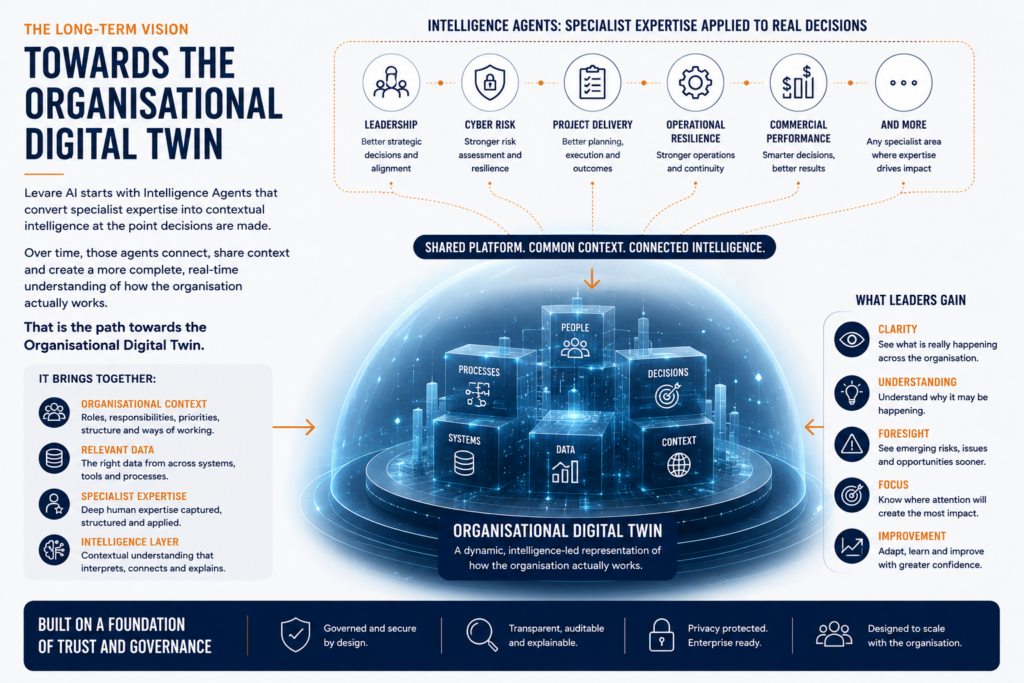
Daedalus, our first intelligence agent, is the first expression of that idea. It is not designed to answer generic questions about strategy or leadership. It is designed to help leaders and managers think through what is happening in their specific organisation, with their specific pressures, constraints, behaviours and priorities.
In that sense, Daedalus is less about giving people a quicker answer and more about helping them ask better questions. What is really going on here? Where is the organisation clear, and where is it confused? Where are people aligned, and where are they pulling in different directions? What is being said in meetings that is not showing up in behaviour? What conditions are helping performance, and what conditions are getting in the way?
That is the kind of thinking that has usually depended on having the right adviser, coach or experienced leader in the room. Levare is being built to make more of that thinking available, not as a one-off intervention, but as something leaders and managers can use as they work through real issues in real time.
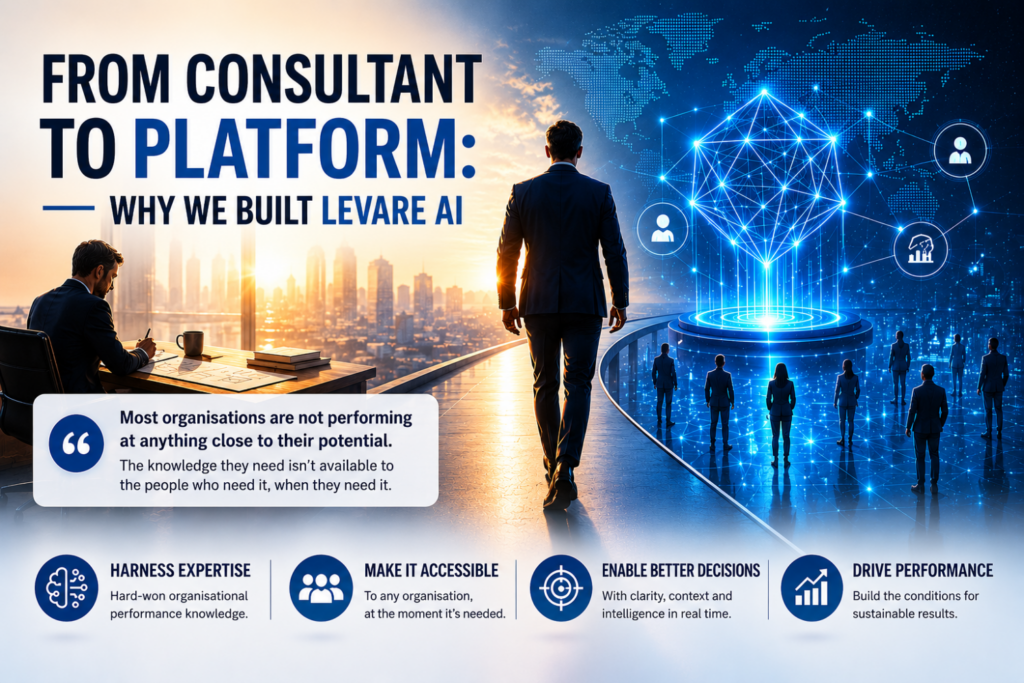
The journey from consultant to platform has not been a straight line, but the logic behind it is simple enough. I have spent much of my life in environments where performance matters, and much of my working life helping organisations understand why performance is not always where it should be. Levare is the next step in that journey.
It is our attempt to make organisational performance expertise more available, more contextual, and more useful to the people who need it, not just at the top of the organisation, but wherever decisions are being made and work is being shaped.
That is ultimately what Levare is being built to support: better organisational performance through better organisational understanding.
Organisational intelligence starts with better understanding.
Interested in early platform access or receiving insights on leadership, performance and contextual intelligence – along with updates on the Levare platform.