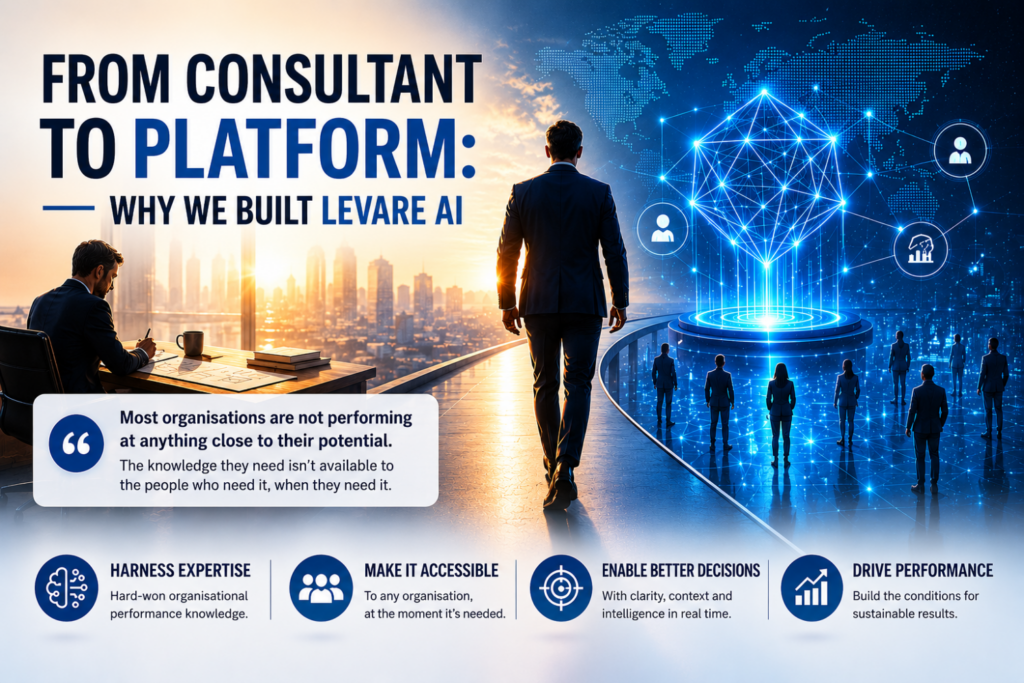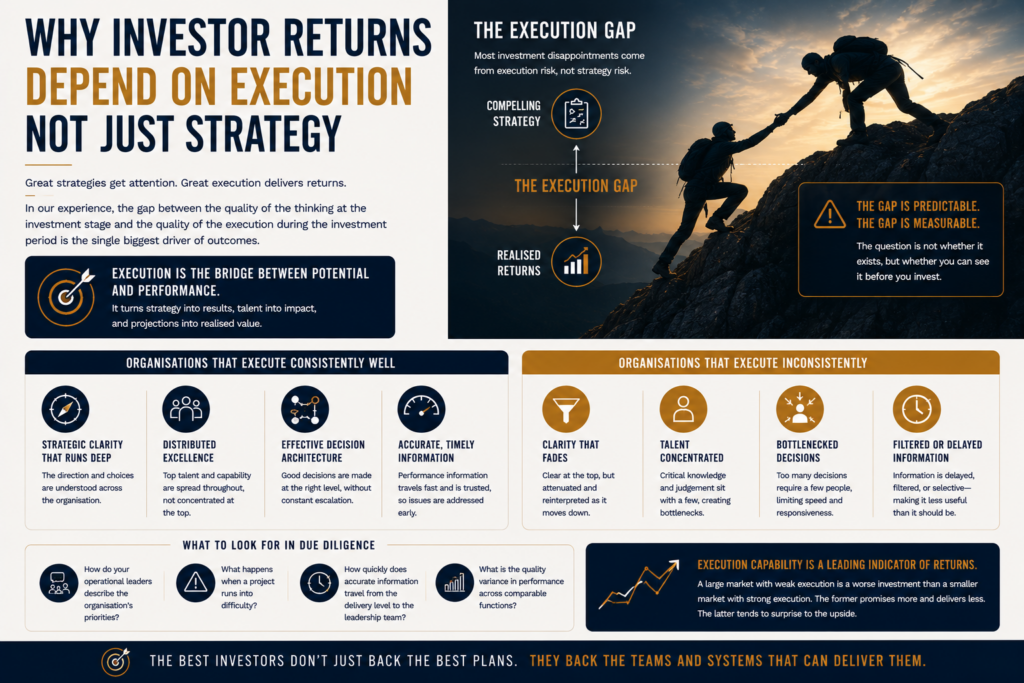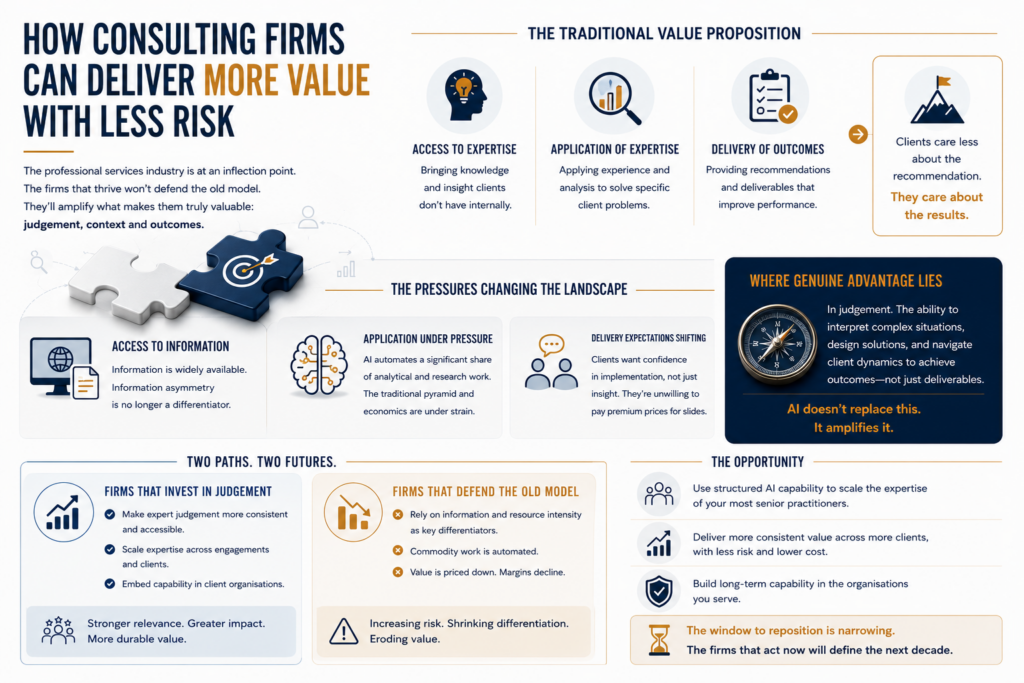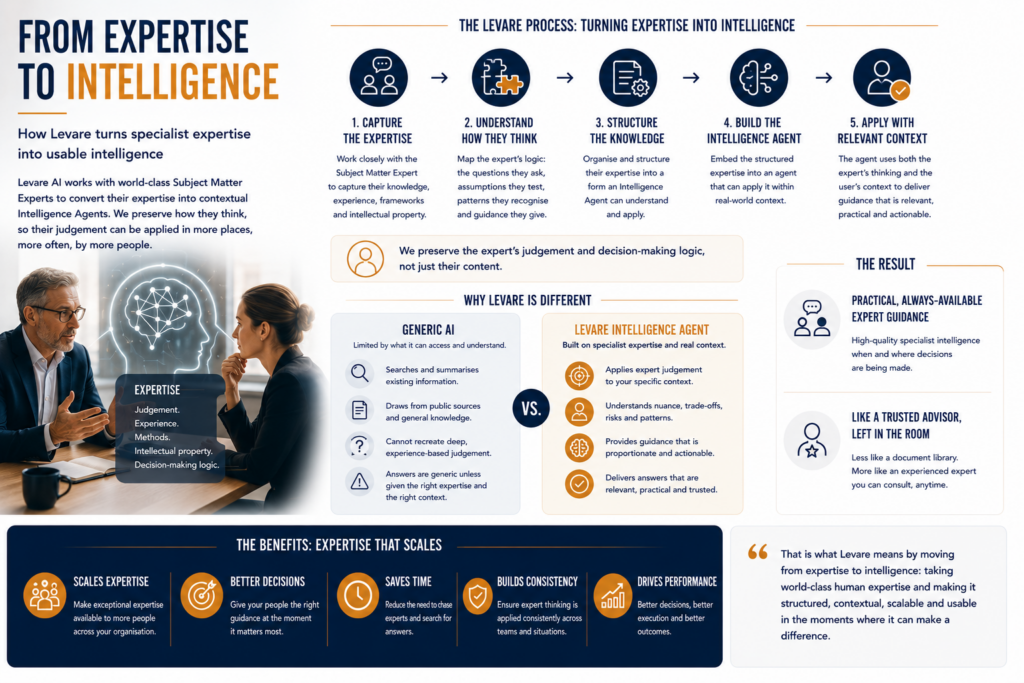
Levare AI starts with Intelligence Agents, but the long-term vision reaches beyond any single agent or individual use case.
Each agent is designed to convert specialist human expertise into usable, contextual intelligence. One agent may support leadership decision-making, another may support cyber risk, project delivery, operational resilience, commercial performance or another specialist area. Each has value in its own right because it gives users access to high-quality expertise at the point decisions are being made.
The wider opportunity appears when those agents are built on the same platform and governed by the same operating logic. At that point, the value is no longer limited to what each agent can do on its own. The agents can begin to contribute to a more connected understanding of the organisation, with each one helping to interpret a different area of activity, decision-making or performance.
For Levare AI, that direction of travel leads towards an Organisational Digital Twin.
A traditional digital twin usually represents a system, asset or process. It helps organisations understand how something works, how it is behaving, and what may happen if conditions change. That is useful, but an organisation is more complex than a machine, a production line or a technical system. It is shaped by people, decisions, behaviours, priorities, processes, systems, data and the conditions in which work actually happens.
An Organisational Digital Twin therefore needs more than a technical model. It needs an intelligence layer that can interpret the context in which the organisation is operating. That means helping leaders understand how decisions are being made, how work is flowing, how processes are being used, where systems are helping or hindering, where information is moving well, and where friction, risk, alignment or value are being shaped.
Levare AI’s work begins with contextual Intelligence Agents that help users apply specialist expertise to real decisions. Each agent creates value in its own area, but the wider value grows as more agents are developed, connected and deployed across different organisational domains. Over time, this creates a richer and more connected understanding of how the organisation works, allowing leaders to see it less as a set of disconnected functions and more as a living system shaped by people, processes, decisions, systems and data.
This matters because leaders rarely struggle from a lack of information alone. More often, they struggle to make sense of what the information means. Data sits in different systems, insight sits in different functions, expertise sits with different individuals, and performance issues are often only fully understood after the consequences have appeared.
The long-term vision is to bring that context into a more usable form of organisational intelligence. Not simply to show leaders more data, but to help them understand what is happening, why it may be happening, and where attention may be needed.
For Levare AI, this is not about building another dashboard. It is about creating a deeper intelligence layer that helps organisations understand, adapt and improve with greater clarity. That is what Levare means by the long-term vision: moving from individual Intelligence Agents towards a fuller representation of how the organisation actually works.
In simple terms, an Organisational Digital Twin is a dynamic, intelligence-led representation of how an organisation actually works. It brings together organisational context, relevant data and specialist expertise, enabling leaders to understand what is really going on inside their organisation in real time, and to see the conditions shaping performance, alignment, risk and value creation.
Organisational intelligence starts with better understanding.
Interested in early platform access or receiving insights on leadership, performance and contextual intelligence – along with updates on the Levare platform.