The promise of artificial intelligence in business has always been straightforward: better decisions, faster execution, improved outcomes. The reality, for most organisations, has been considerably more complicated.
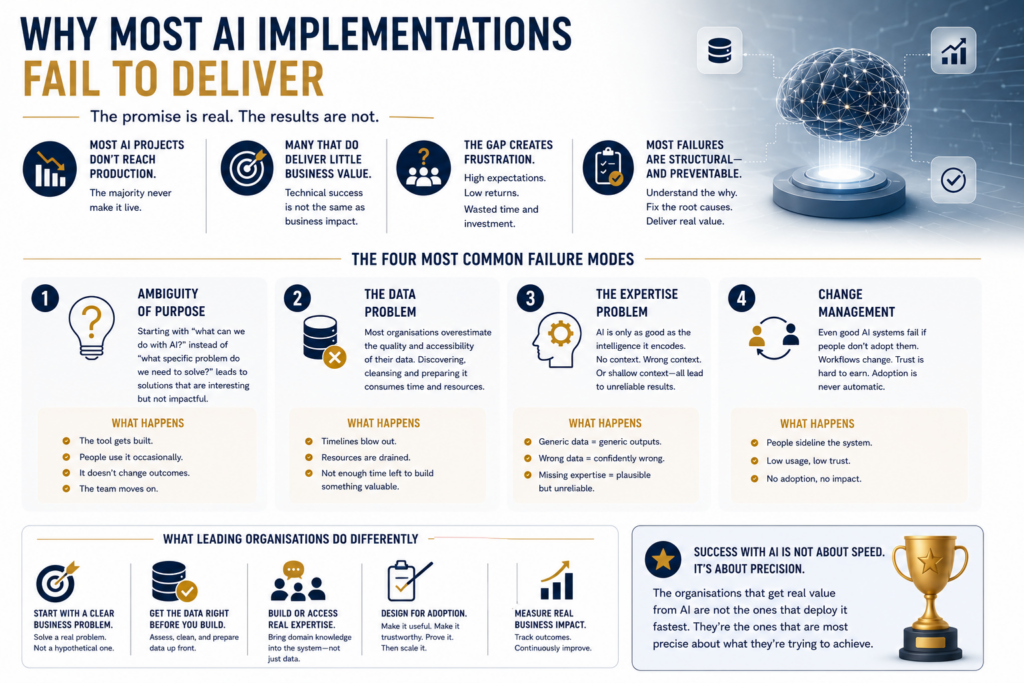
The statistics on AI implementation are sobering. The majority of AI projects do not reach production. A significant proportion of those that do fail to deliver measurable business value. And the gap between the enthusiasm with which AI initiatives are launched and the results they actually produce has become, for many organisations, a source of genuine frustration.
Understanding why this happens is important – not to be pessimistic about AI’s potential, which is real and substantial – but because most of the reasons are structural and preventable.
The first and most common failure mode is ambiguity of purpose. AI implementations that begin with the question “what can we do with AI?” rather than “what specific problem do we need to solve?” tend to produce solutions that are technically interesting but operationally marginal. The tool gets built. People use it occasionally. It does not change how decisions are made or how the organisation performs. And six months later, the team that built it is working on something else.
The second failure mode is the data problem. AI systems require good data to produce useful outputs. Most organisations significantly overestimate the quality and accessibility of their data before they begin. The process of discovering what data actually exists, in what condition, and whether it is fit for purpose tends to absorb the majority of implementation timelines – leaving insufficient time and resource to build anything that delivers meaningful value.
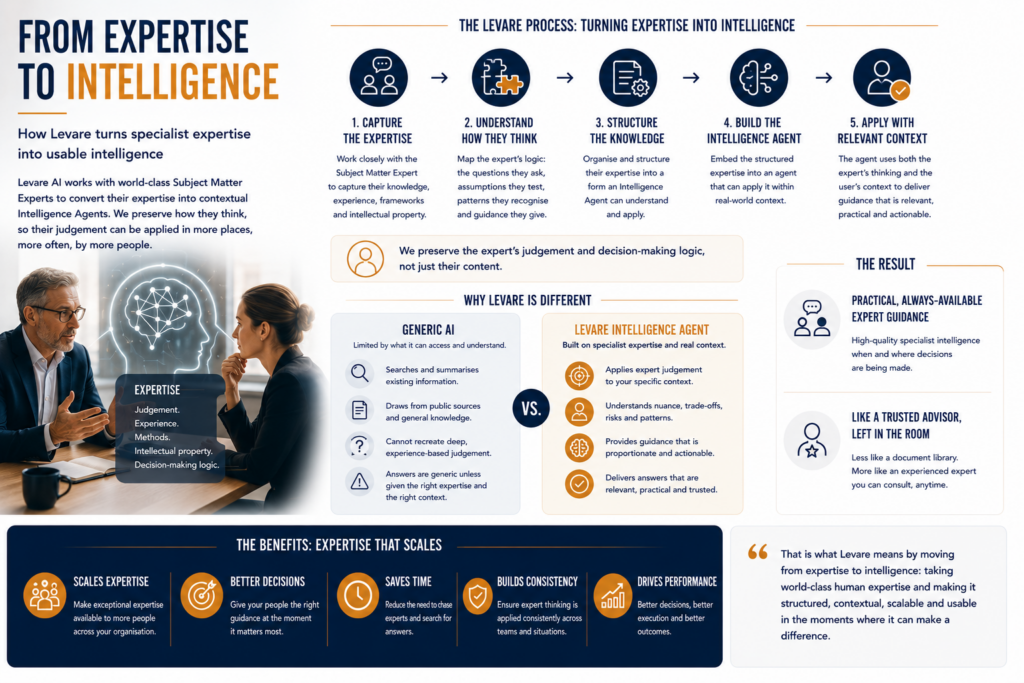
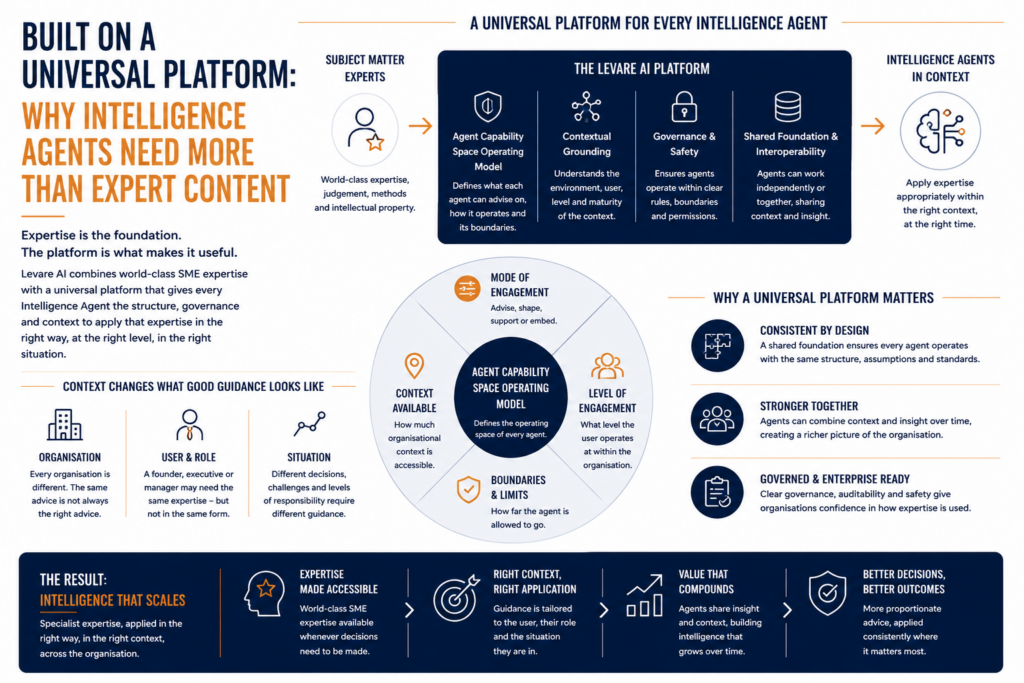
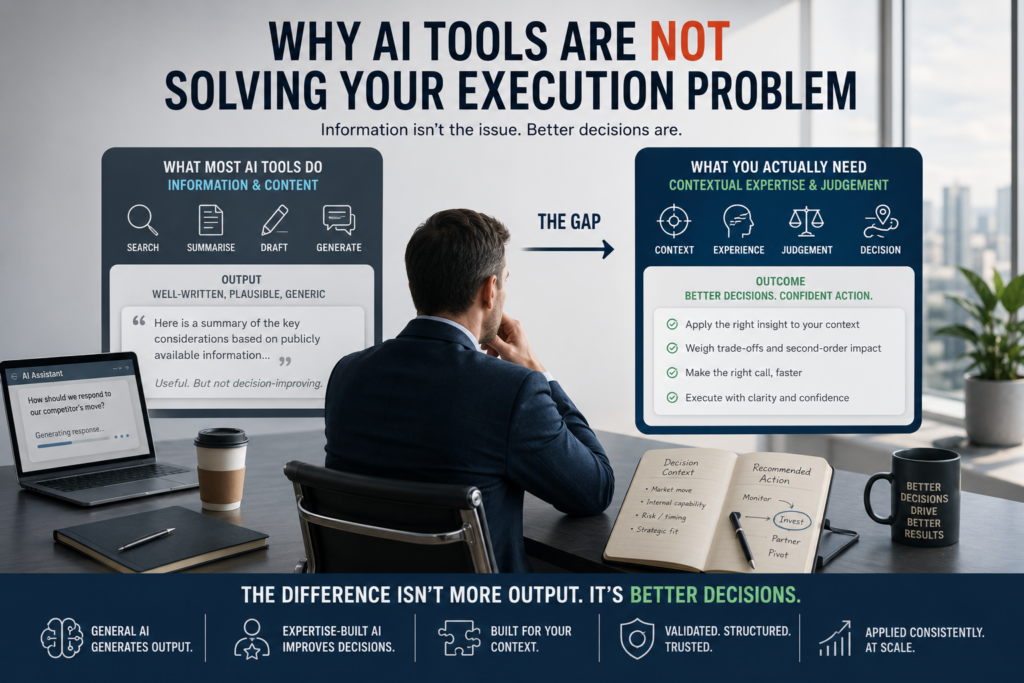
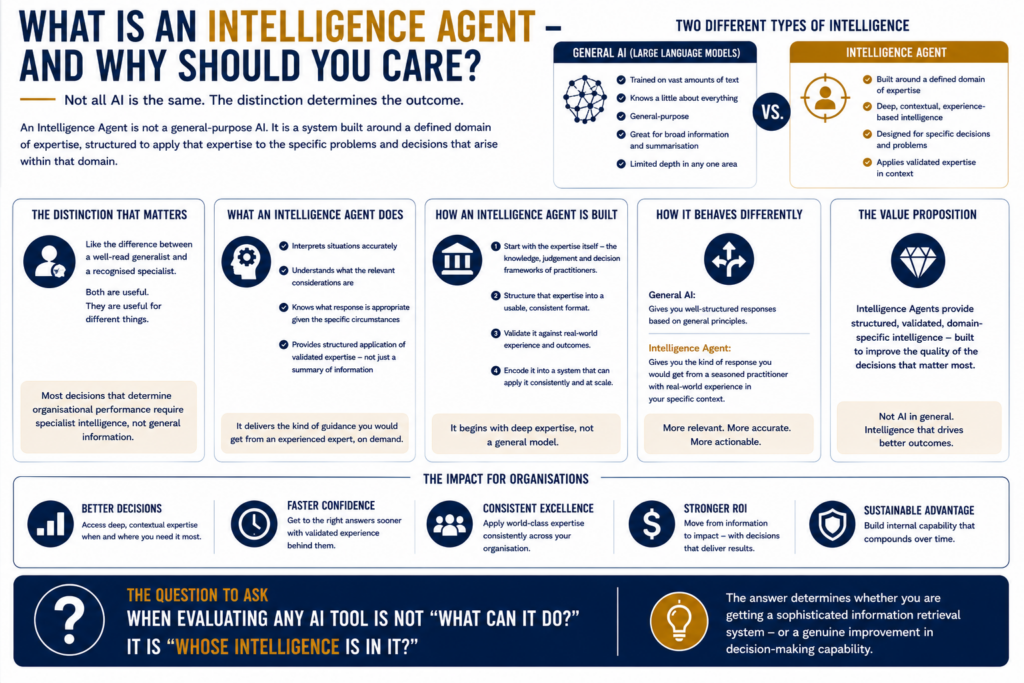
The third failure mode is the one that is least often acknowledged: the expertise problem. AI systems are only as useful as the intelligence they encode. A system trained on generic data produces generic outputs. A system trained on the wrong data produces confidently wrong outputs. And a system that has access to good data but lacks the contextual understanding needed to interpret it correctly produces outputs that look plausible but are not reliably trustworthy.
This is particularly acute in business contexts where the decisions that matter most are the ones that require genuine domain expertise – not just data retrieval, but the kind of structured judgement that comes from having operated in a specific field for years. General-purpose AI systems are not designed to provide this. And the assumption that they can be fine-tuned quickly and cheaply to fill this gap tends to underestimate both the complexity of the expertise and the difficulty of encoding it accurately.
The fourth failure mode is change management – which is perhaps the least surprising on this list, but no less common for that. AI systems that are technically sound but that require significant changes to existing workflows, or that ask people to trust outputs they cannot evaluate, tend to be quietly sidelined by the people they were designed to help. Adoption is not automatic. It has to be earned through demonstrable accuracy, genuine usefulness, and a track record of getting it right when it matters.
None of these failure modes are inevitable. They are addressable. But addressing them requires being honest about what AI can and cannot do, what problems it is genuinely suited to solving, and what conditions need to be in place for it to deliver the value that is claimed for it.
The organisations that are getting real value from AI are not the ones that deployed it fastest. They are the ones that were most precise about what they were trying to achieve.
Organisational intelligence starts with better understanding.
Interested in early platform access or receiving insights on leadership, performance and contextual intelligence – along with updates on the Levare platform.