Very early in my work with organisations, I began to see a pattern that has stayed with me ever since. The work in the room could be good. The leadership team could be engaged, the conversations could be honest, and the thinking could become much clearer. People could see more precisely what was getting in the way of performance, where the organisation was aligned, where it was confused, and what needed to change.
On the surface, that looked like progress, and in one sense it was. But I soon realised that the real test was not whether a leadership team understood something in the room. The real test was whether that understanding could travel far enough through the organisation to make a difference to how people made decisions, set priorities and worked together.
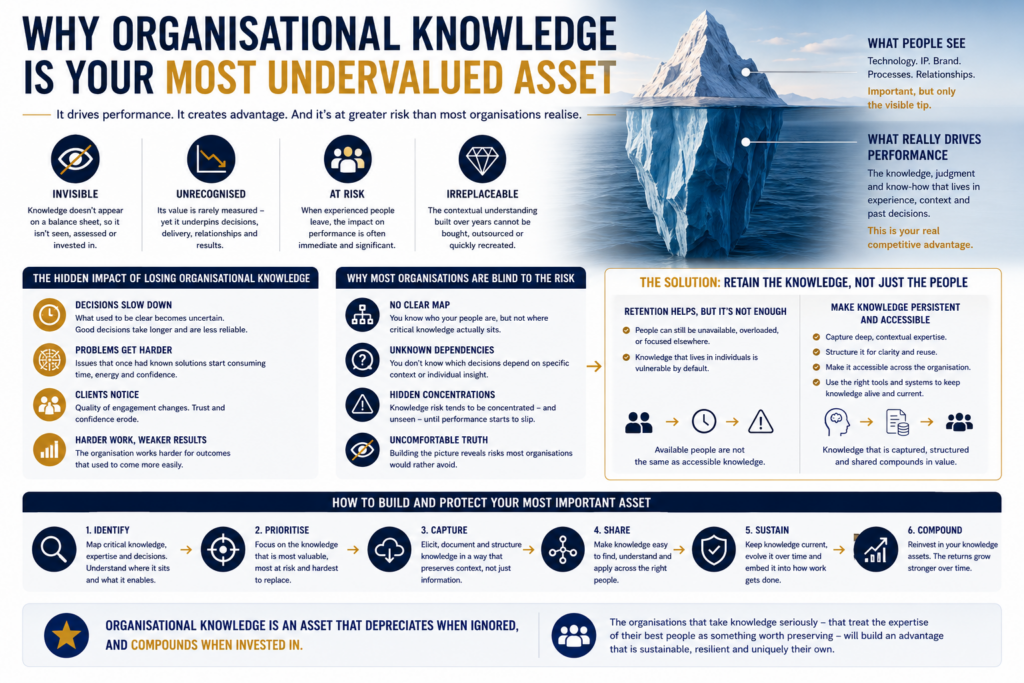
That was where the problem kept showing itself. People would leave conversations with more clarity and better intent, but the organisation would often drift back towards familiar habits. Not because people were lazy, resistant or pretending to agree, but because the thinking that had helped them in the room was not consistently available in the ordinary moments where the work actually happened.
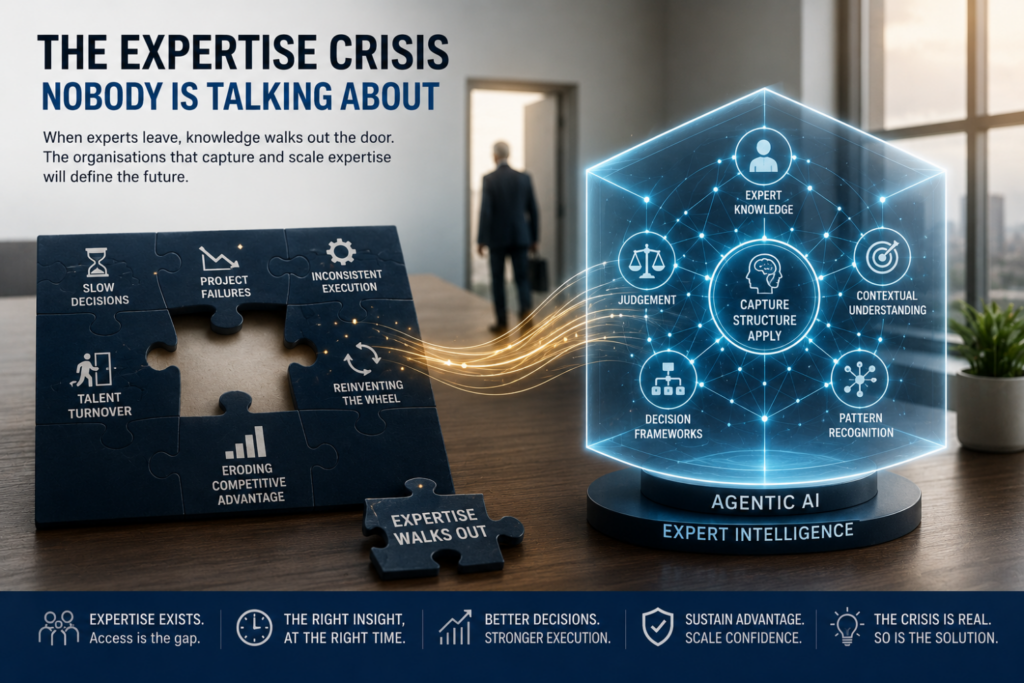
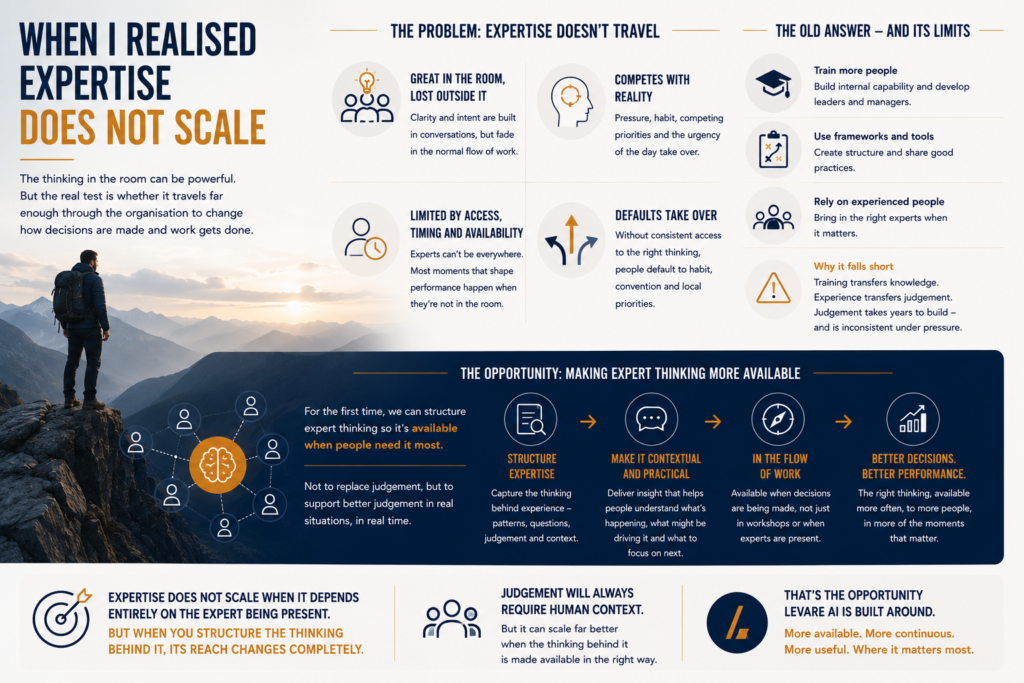
That was one of my earliest lessons in organisational performance: expertise has real value, but it does not scale well if it depends entirely on the expert being present. When the conversation was live, the thinking could be useful. But once people moved back into the normal flow of work, that thinking had to compete with pressure, habit, competing priorities and the everyday reality of running the business.
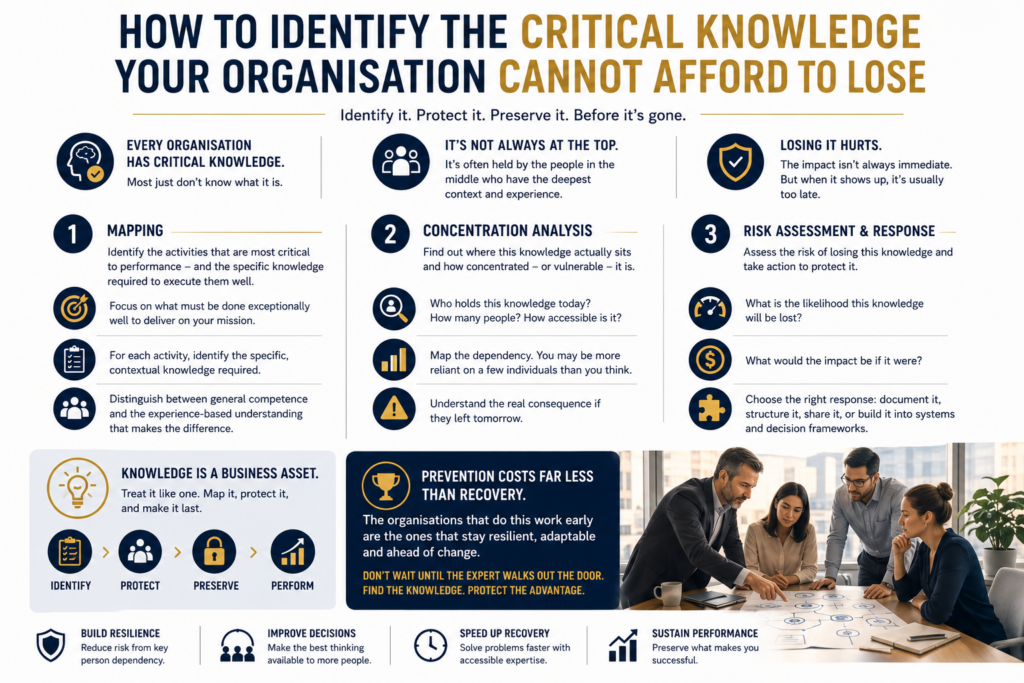
This is not just a consultancy problem. It is an organisational problem. Most organisations have people who carry a lot of experience, judgement and understanding in their heads. Founders, senior leaders, experienced managers, technical specialists and trusted advisers often know how to read situations, spot patterns, ask better questions and bring proportion to complexity. The difficulty is that their value is usually limited by access, timing and availability.
They cannot be everywhere. They cannot sit in every conversation, guide every decision, or provide the right context every time someone comes up against a difficult trade-off. So the organisation often relies on expertise being present at the moment it is needed, even though most of the moments that shape performance happen when that expertise is not in the room.
For a long time, the obvious answer was to train more people, build internal capability, run workshops, create frameworks and develop leaders and managers so they could carry more of that thinking themselves. All of that matters, and done well, it can make a real difference. Organisations should absolutely invest in helping their people think better, lead better and make better decisions.
But there is still a gap. Training can transfer knowledge, language and some structure, but what it struggles to transfer is the more contextual judgement that comes from experience: the ability to read a situation, understand what may really be happening, decide what matters most, and know what kind of response the situation calls for. That sort of judgement takes years to build, and it is inherently inconsistent because people develop and apply it in different ways, especially under pressure.
This is one of the reasons organisations often find it difficult to sustain change. They may introduce the right ideas, and people may understand them at the time, but the thinking is not consistently available when the work becomes messy again. As soon as the urgent takes over, people tend to default to habit, convention, local priorities and the familiar ways of getting through the day.
That is where the opportunity has changed.
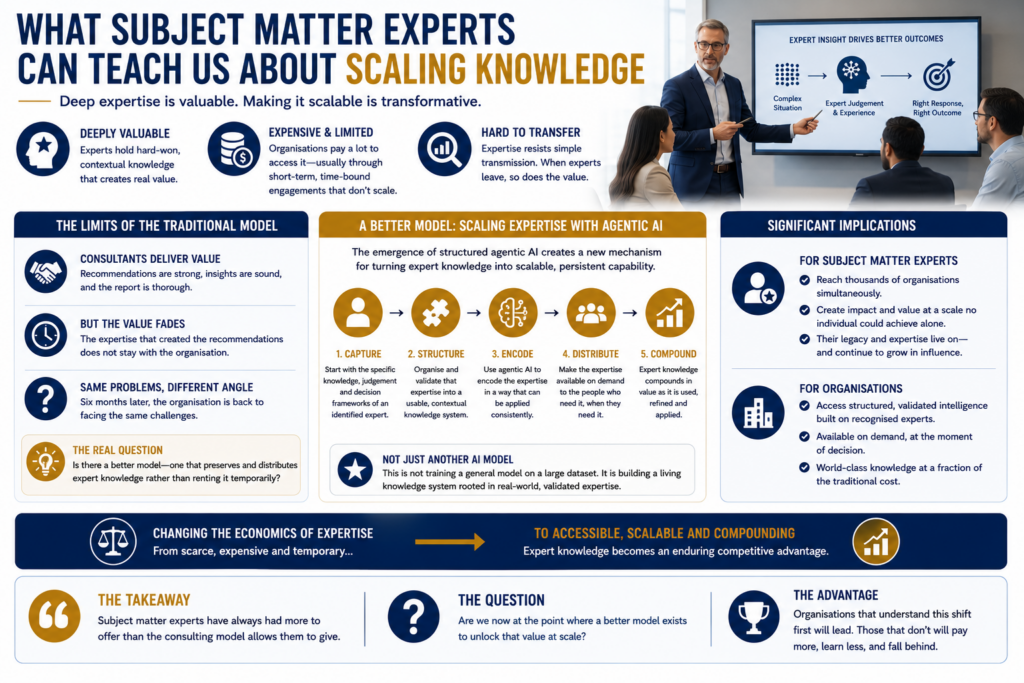
For the first time, there is a credible mechanism for making expert thinking more available without relying entirely on the expert being physically present. Not by replacing judgement, and not by pretending that software can carry the full nuance of human experience, but by structuring enough of that expertise to help people think more clearly when they are facing real issues in real time.
That distinction matters. The value is not simply in storing knowledge or producing faster answers. Organisations already have more information than they can use. The value is in making experience-based thinking available in a way that is contextual enough to help leaders and managers understand what is happening, what might be driving it, and what they may need to pay attention to next.
That is one of the reasons Levare exists.
The aim is to make organisational performance expertise more available, more continuous and more useful at the point where it can actually help. Not occasionally, not only in workshops, and not only when the right adviser or experienced leader is in the room, but in the flow of work, when people are trying to make sense of decisions, behaviours, priorities and performance.
Expertise does not scale well when it depends entirely on the expert being present. But if you can structure the thinking behind that expertise and make it available in a contextual, practical way, then the reach of that expertise changes completely.
It will never scale perfectly, because judgement will always require human context. But it can scale far better than it has before, if the thinking behind it is made available in the right way.
That is the opportunity Levare AI is built around.
Organisational intelligence starts with better understanding.
Interested in early platform access or receiving insights on leadership, performance and contextual intelligence – along with updates on the Levare platform.