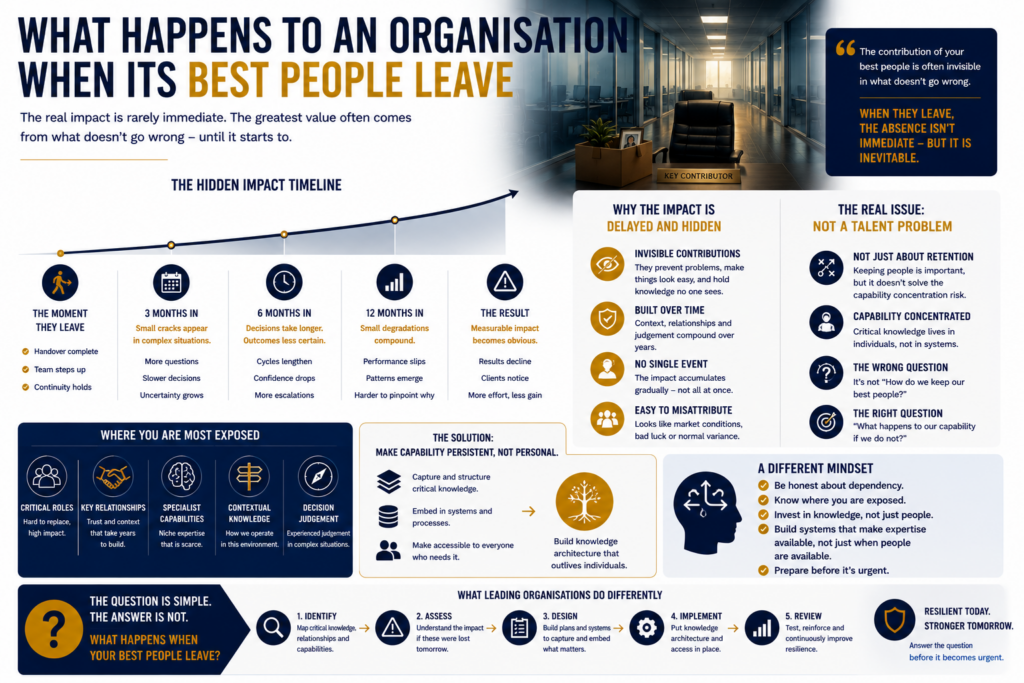
The moment when a key person leaves an organisation is rarely the moment when the real impact becomes visible. The immediate aftermath is often characterised by a level of continuity that reassures leadership teams – the remaining team is capable, the processes are in place, the handover was reasonably thorough.
The real impact tends to emerge later. Three months in, when a complex client situation arises and nobody is quite sure how the person who left would have navigated it. Six months in, when a decision that used to be made quickly and confidently is now taking three times as long and producing less reliable outcomes. A year in, when a pattern of small degradations has accumulated into a measurable change in performance that is difficult to attribute clearly but impossible to ignore.
This delayed visibility is one of the reasons organisations consistently underestimate the value of their most capable people. The contribution of an experienced leader or specialist is often most visible in what does not go wrong – in the problems that are resolved before they escalate, the decisions that are made quickly because the right framework is immediately available, the situations that are navigated with apparent ease because of a depth of contextual understanding that has been built over years.
When that person leaves, these invisible contributions disappear. But because they were invisible in the first place, their absence is not immediately obvious. The organisation continues to operate. Results hold. The story told internally is one of resilience and capability.
Then the situations arise that the departed individual would have handled differently. And the gap becomes apparent.
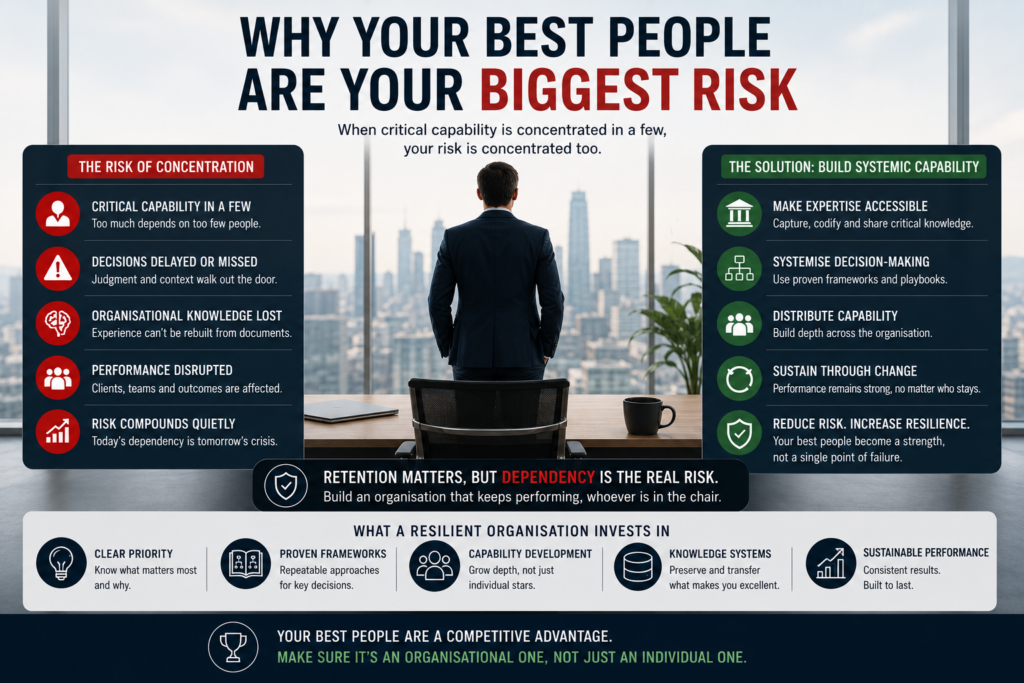
The organisations that manage this risk most effectively are those that have moved beyond thinking about it purely as a talent problem. Talent management – recruitment, retention, development – is important and necessary. But it does not address the fundamental issue, which is that critical knowledge and capability have been allowed to concentrate in individuals rather than being embedded in systems.
The question that distinguishes organisations that manage this risk from those that do not is not “how do we keep our best people?” It is “what happens to our capability if we do not?”
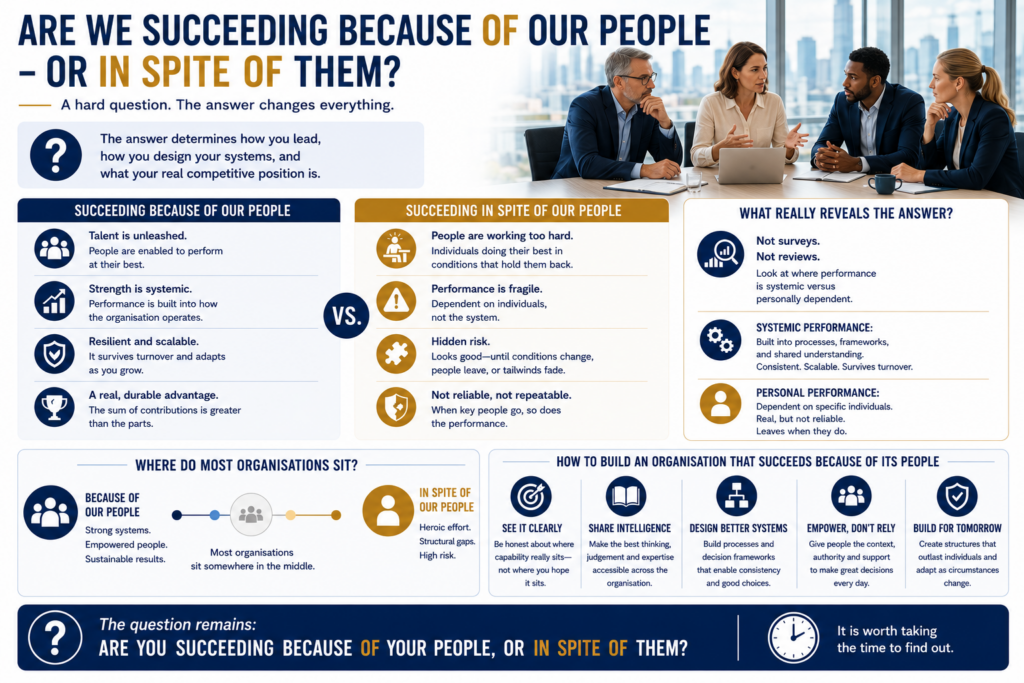
Asking this question honestly and acting on the answer requires a level of organisational self-awareness that many leadership teams find uncomfortable. It means being explicit about where the organisation is most exposed – which roles, which relationships, which specific capabilities would be most difficult to replace. It means being honest about the degree to which current performance depends on the presence of specific individuals. And it means investing in making critical knowledge and capability persistent rather than personal.
This investment looks different from most talent and people investments. It is not primarily about development or engagement. It is about knowledge architecture – about building systems that capture, structure, and make accessible the intelligence that currently lives inside the organisation’s most capable people.
The organisations that make this investment do not do so because they believe their best people are about to leave. They do so because they understand that the value of expertise is greatest when it is accessible to everyone who needs it – not just when the person who holds it happens to be available.
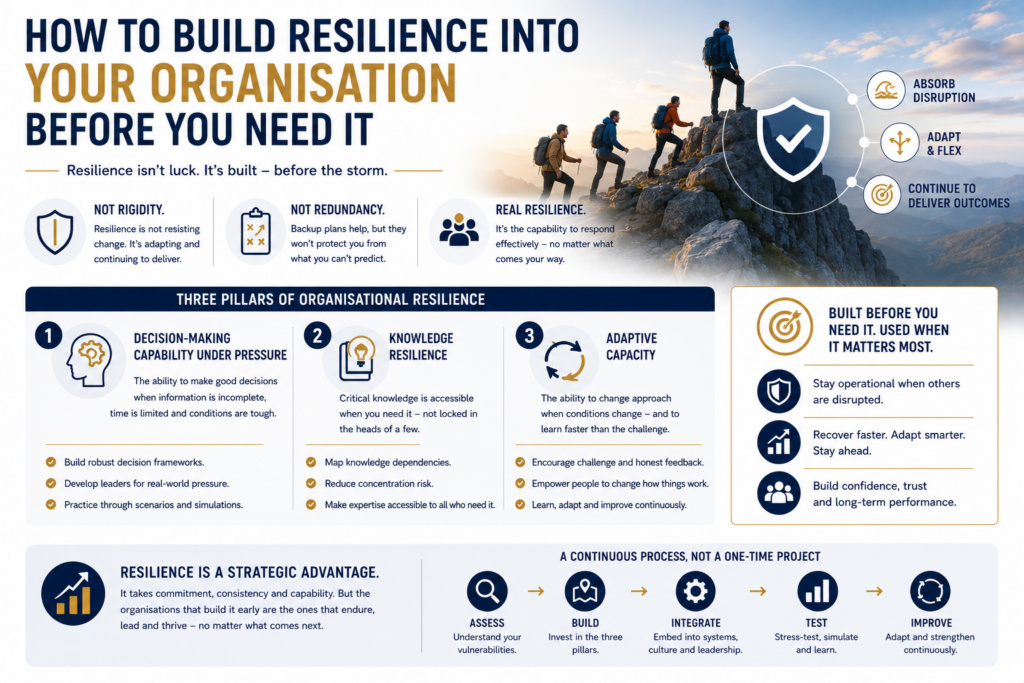
The question of what happens when your best people leave is worth answering before it becomes urgent. Once it is urgent, the options available are significantly narrower.
Organisational intelligence starts with better understanding.
Interested in early platform access or receiving insights on leadership, performance and contextual intelligence – along with updates on the Levare platform.