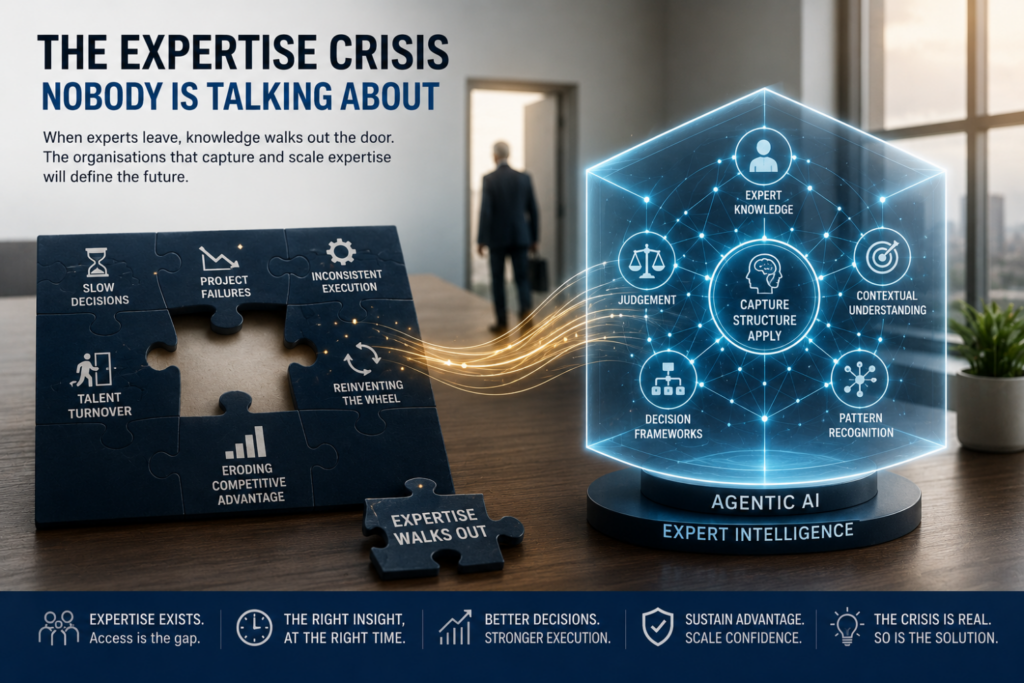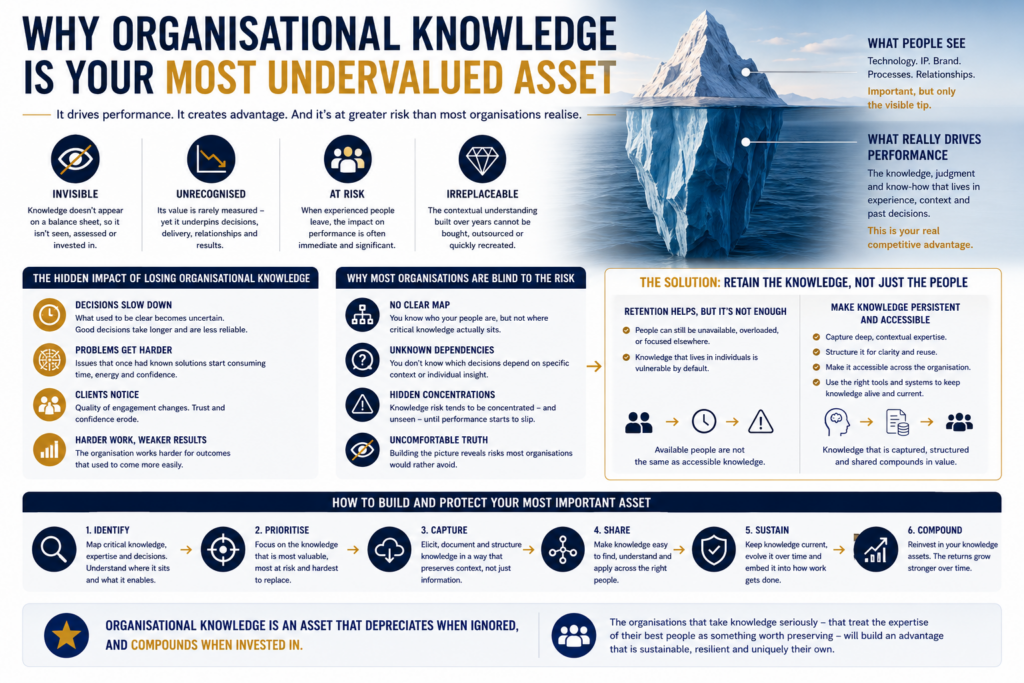
Ask most organisations what their most valuable assets are and you will get answers that include technology, intellectual property, customer relationships, and brand. Rarely will you hear organisational knowledge mentioned – the accumulated understanding of how to operate, how to make decisions, and how to navigate the specific challenges of the markets and contexts in which the organisation works.
This is a significant blind spot. Organisational knowledge is not just valuable. It is, in many cases, the primary source of the competitive advantage that organisations believe comes from elsewhere.
The reason it tends to be undervalued is that it is hard to see. Unlike technology or brand, knowledge does not appear on a balance sheet. It is not depreciated. Its value is not assessed. And yet, when it is lost – when the experienced operators who carry it retire, resign, or are restructured out – the impact on organisational performance is often immediate and significant.
The pattern is well established. An organisation with a strong track record of delivery loses several senior people over a relatively short period – to retirement, to competitors, to life circumstances. For a time, the organisation absorbs the loss. The remaining team is capable and committed. The processes are in place. The results hold.
And then, gradually or suddenly, performance changes. Projects that used to run smoothly start encountering problems that nobody quite knows how to resolve. Decisions that experienced leaders would have made quickly take longer and produce less reliable outcomes. Clients notice a change in the quality of engagement. The organisation finds itself working harder to produce results that used to come more easily.
This is what the loss of organisational knowledge looks like from the inside. It does not always announce itself clearly. It tends to look, at first, like a run of bad luck or a change in market conditions.
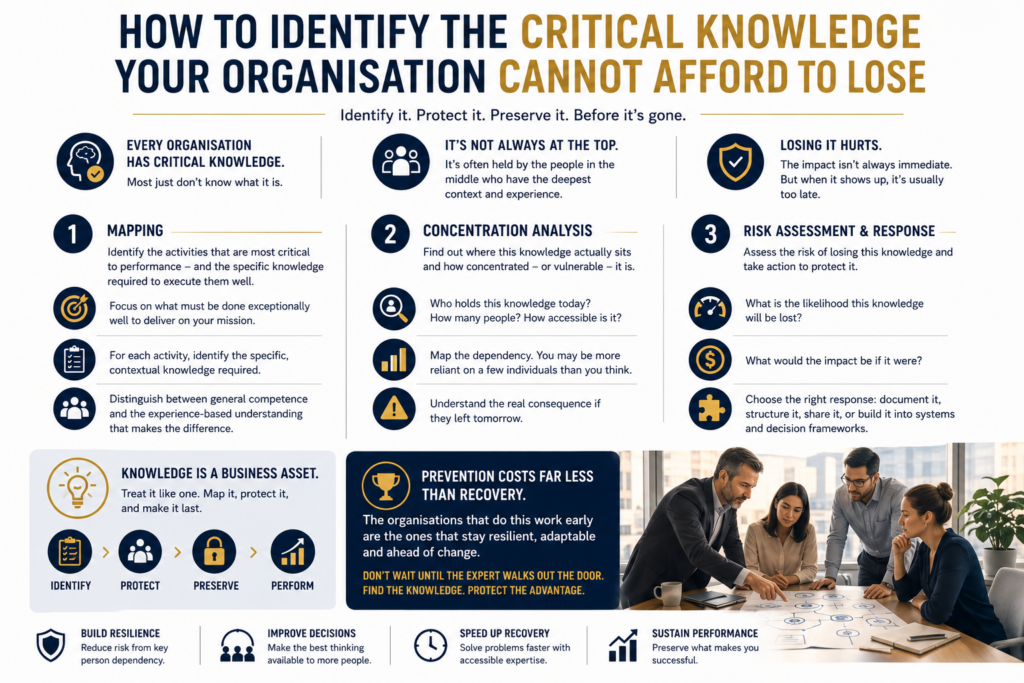
The challenge is compounded by the fact that most organisations do not have an accurate picture of where their critical knowledge actually sits. They know who their senior people are. They have org charts and succession plans. But they rarely have a clear map of which specific expertise is most critical, which decisions depend on the contextual understanding of particular individuals, and what the realistic impact of losing that expertise would be.
Building this picture is not a comfortable exercise. It tends to reveal concentrations of knowledge risk that most organisations would rather not confront directly. But it is a necessary one – because knowledge risk that is not understood cannot be managed.
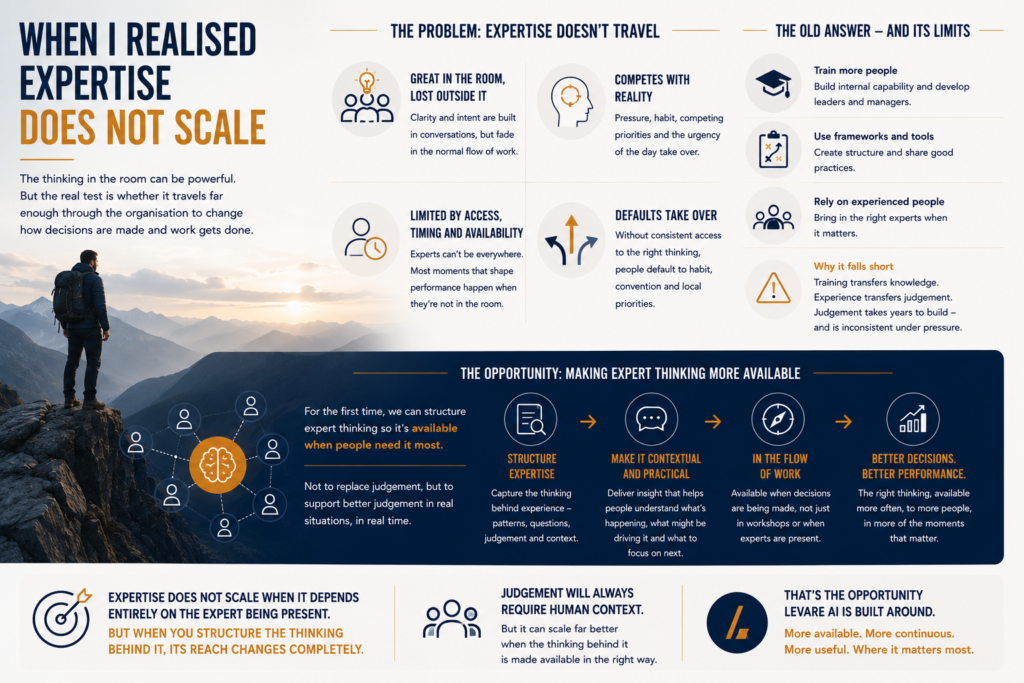
Managing it effectively requires a different approach from the talent retention strategies most organisations default to. Retention matters. But the knowledge risk that retention is supposed to address persists even when people stay – because knowledge that lives in individuals is available only when those individuals are available, engaged, and not overloaded with other demands.
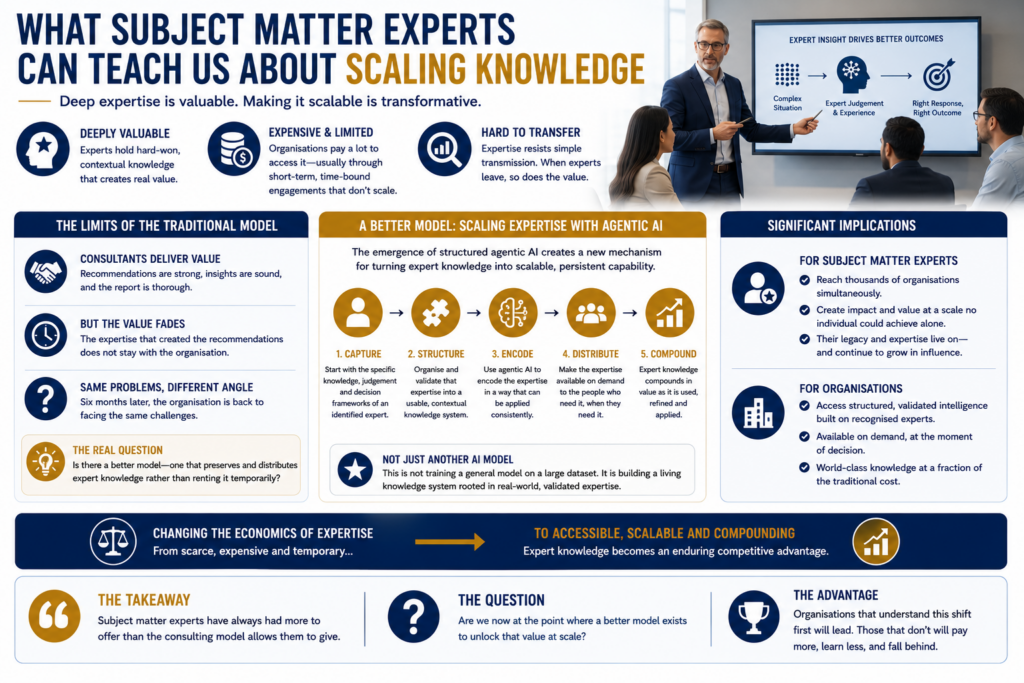
The real solution is not to retain the people. It is to retain the knowledge – to find mechanisms that make critical organisational intelligence persistent and accessible independently of the individuals who currently hold it.
This is harder than it sounds, but it is no longer as technically challenging as it once was. The tools now exist to capture, structure, and make accessible the kind of deep, contextual expertise that previously could only be accessed through direct engagement with the person who held it.
Organisational knowledge is an asset that most organisations are allowing to depreciate without noticing. The organisations that take it seriously – that treat the knowledge held by their best people as something worth preserving and investing in – will find that this investment compounds in value in ways that most other investments do not.
Organisational intelligence starts with better understanding.
Interested in early platform access or receiving insights on leadership, performance and contextual intelligence – along with updates on the Levare platform.