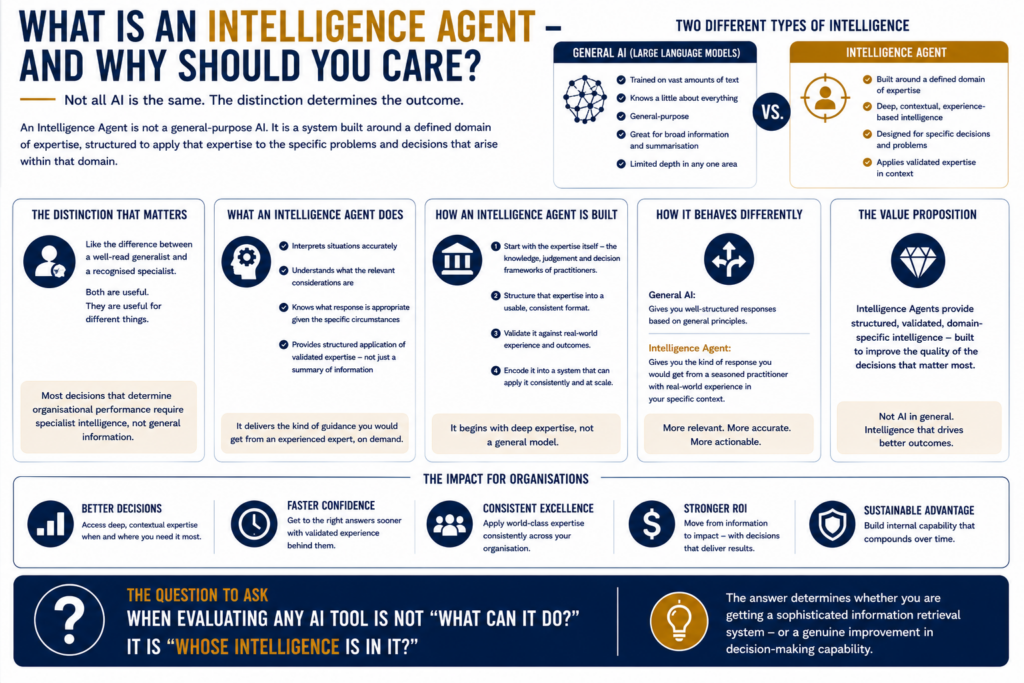
The term “Intelligence Agent” is becoming more widely used as agentic AI enters the mainstream of business technology. Like most new categories, it risks meaning different things to different people – and losing its precision in the process.
It is worth being specific about what an Intelligence Agent actually is, why it is different from other AI tools, and why the distinction matters for the decisions organisations are making about how to deploy AI.
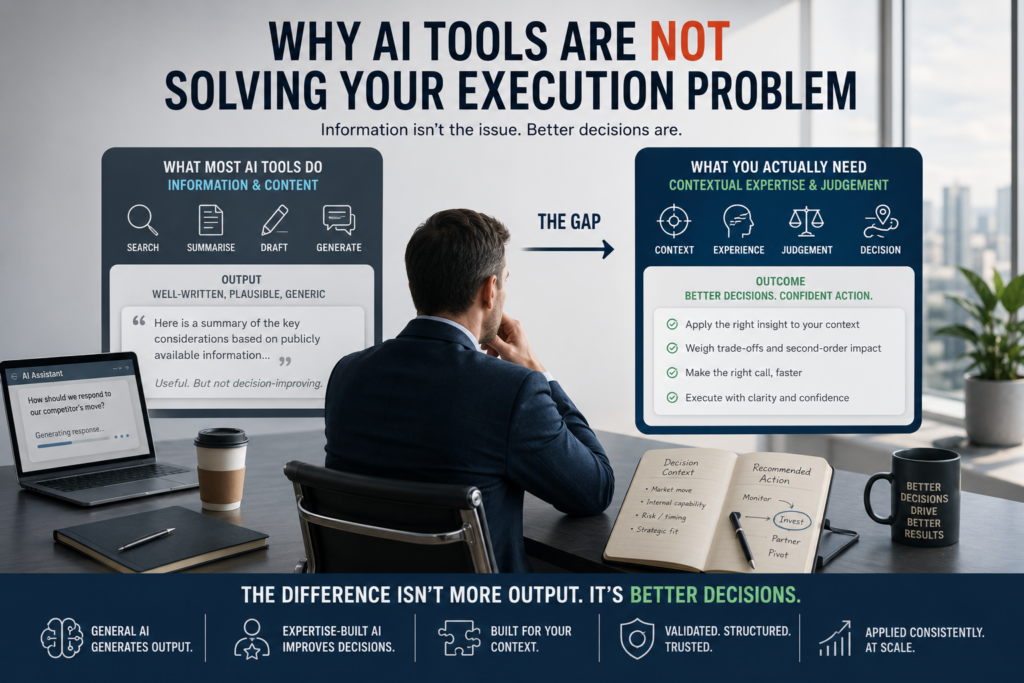
A large language model – the technology underlying most consumer AI tools – is, at its core, a pattern recognition and generation system. It has been trained on a vast corpus of text and can produce fluent, contextually relevant output on an enormous range of topics. It is genuinely impressive. It is also, by design, general-purpose. It knows a great deal about many things and very little in depth about any specific thing.
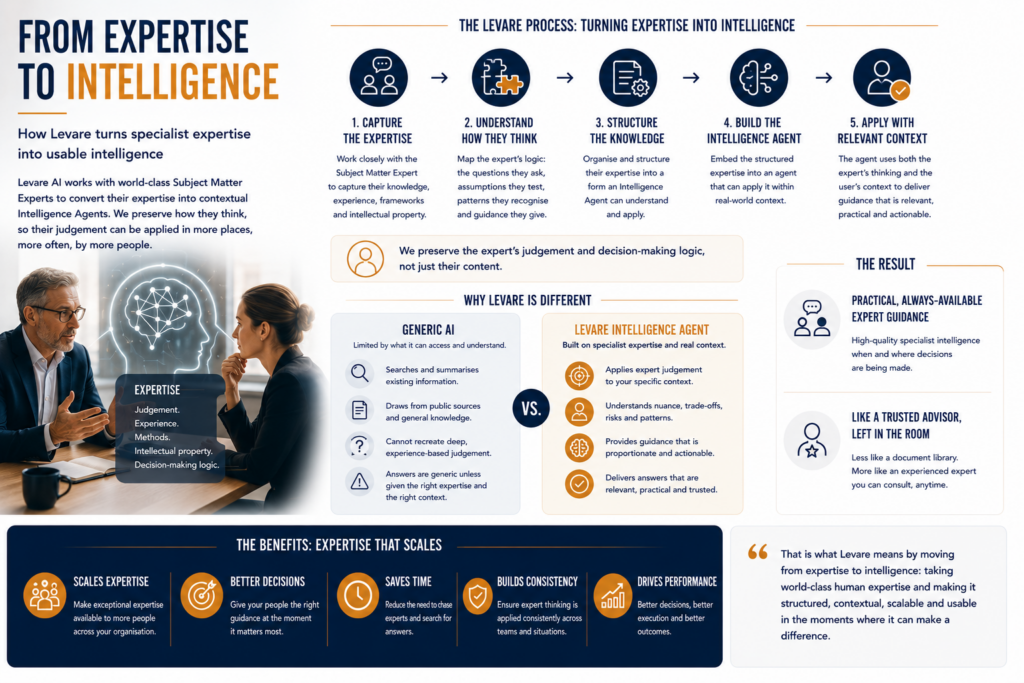
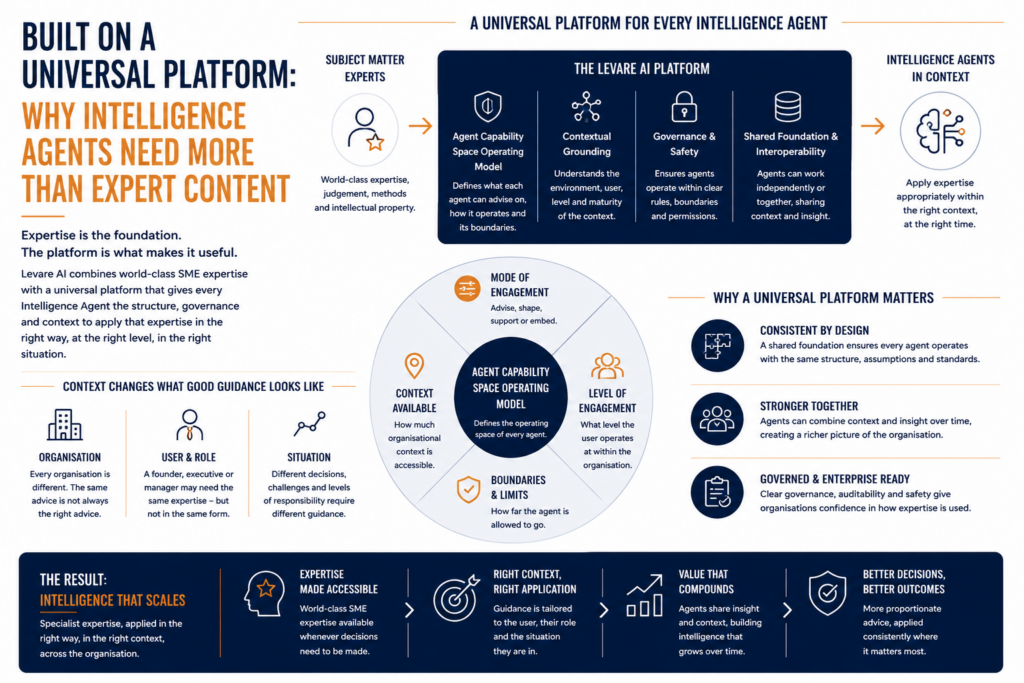
An Intelligence Agent is different in a specific and important way. It is not a general-purpose system. It is a system built around a defined domain of expertise, structured to apply that expertise to the specific problems and decisions that arise within that domain.
The distinction between a general AI and an Intelligence Agent is something like the distinction between a well-read generalist and a recognised specialist. The generalist can give you useful information about almost any topic. The specialist can give you the kind of deep, contextual, experience-based guidance that comes from having operated in a specific field for years. Both are useful. They are useful for different things.
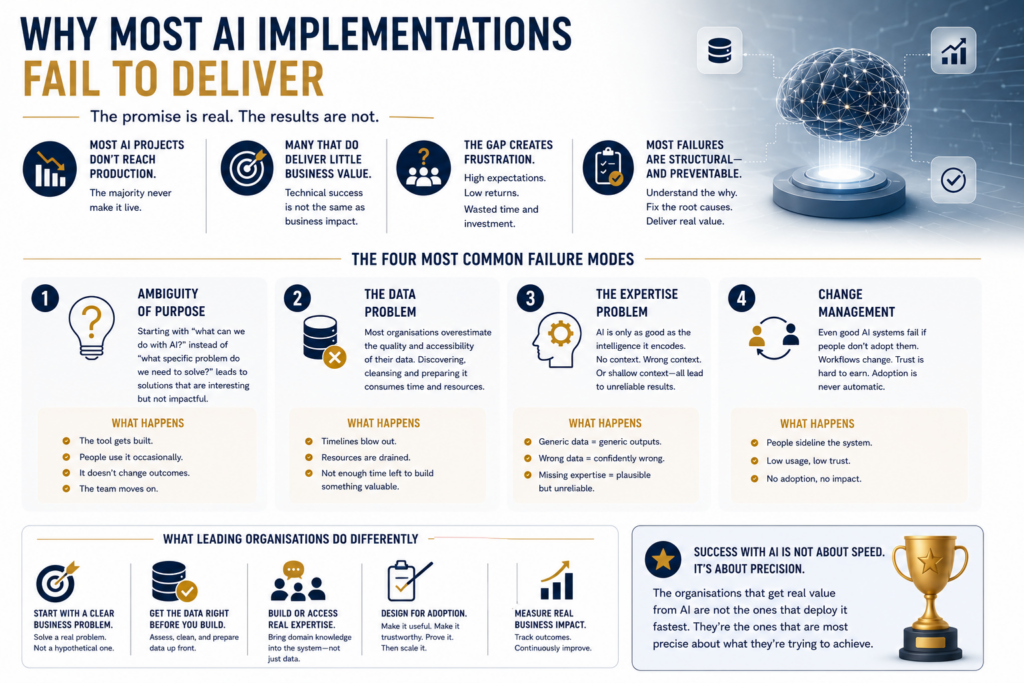
For most of the decisions that actually determine organisational performance – strategic choices, execution decisions, complex operational problems – general-purpose AI is not sufficient. What is needed is the kind of structured, domain-specific intelligence that reflects genuine expertise: the ability to interpret a situation accurately, to understand what the relevant considerations are, and to know what response is appropriate given the specific circumstances.
This is what an Intelligence Agent provides. Not a summary of what has been written about a topic, but the structured application of validated expertise to the specific situation in front of the user.
The way an Intelligence Agent is built reflects this difference. Rather than starting with a large general model and hoping it knows enough about the relevant domain, the process begins with the expertise itself – with the knowledge, judgement, and decision frameworks of practitioners who have spent years or decades in that specific field. That expertise is then structured, validated, and encoded into a system that can apply it consistently and at scale.
The result is a system that behaves very differently from a general AI tool. When a leader asks a general AI tool whether a project is on track, they get a well-structured response drawing on general project management principles. When they ask an Intelligence Agent built on the expertise of practitioners who have delivered hundreds of complex programmes, they get something closer to the response they would get from one of those practitioners – grounded in specific experience, sensitive to the specific signals that matter, and oriented toward the specific actions that are most likely to make a difference.
This is the value proposition of Intelligence Agents. Not AI in general, but intelligence that is structured, validated, and specific – built to improve the quality of the decisions that matter most.
The question to ask when evaluating any AI tool for business use is not “what can it do?” It is “whose intelligence is in it?” The answer to that question determines whether what you are getting is a sophisticated information retrieval system or a genuine improvement in decision-making capability.
Organisational intelligence starts with better understanding.
Interested in early platform access or receiving insights on leadership, performance and contextual intelligence – along with updates on the Levare platform.