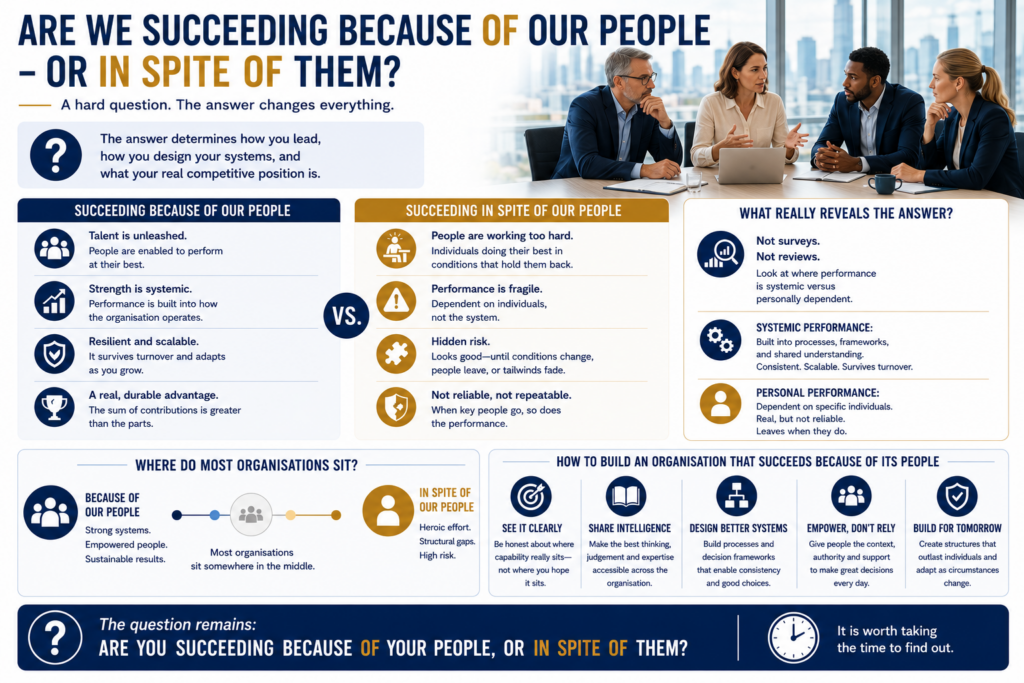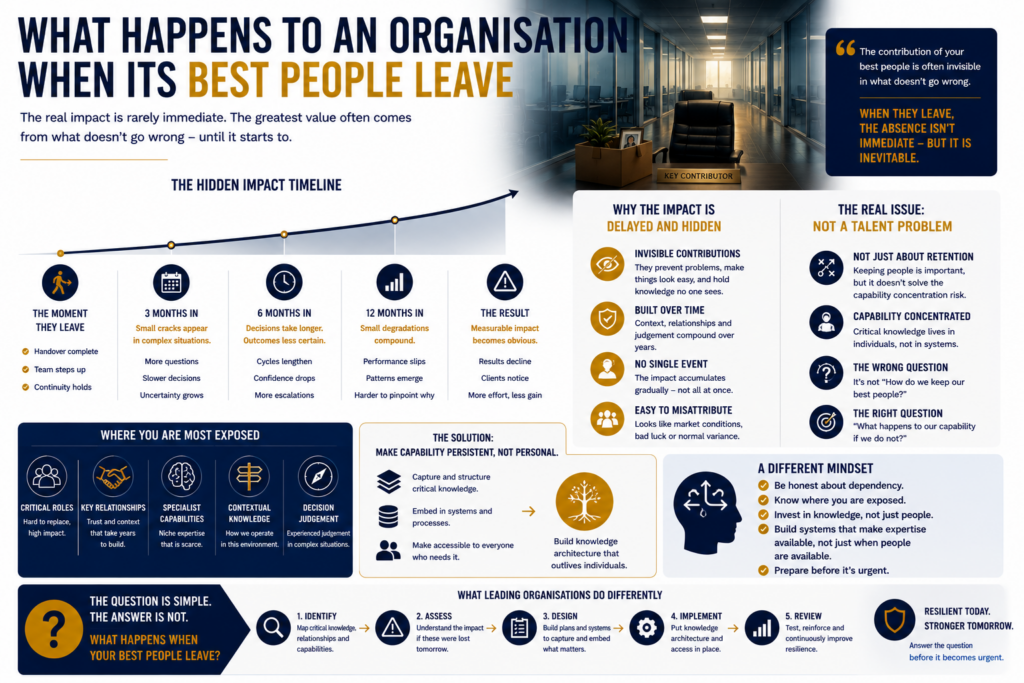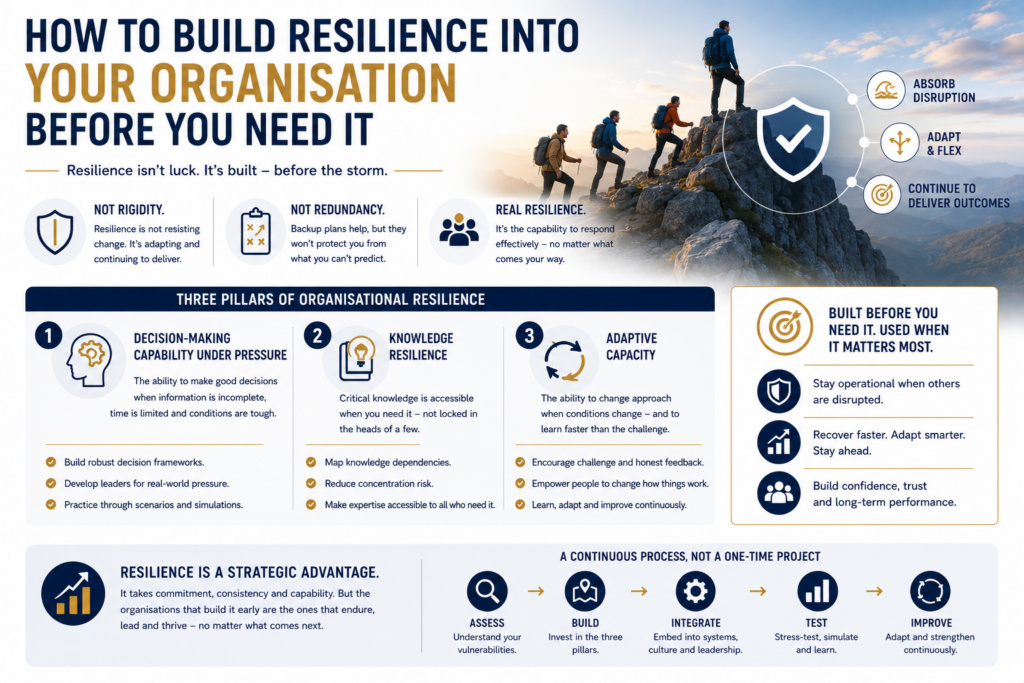
High performance and burnout are not opposites. In many organisations, they are consequences of the same underlying condition – a culture that has learned to extract short-term output at the expense of long-term capability.
This is worth being precise about, because the conventional framing – high performance versus wellbeing – is a false dichotomy that leads organisations toward interventions that address symptoms rather than causes. Wellbeing programmes, mental health days, and flexible working arrangements are not wrong. But they do not address the structural conditions that create unsustainable pressure in the first place.
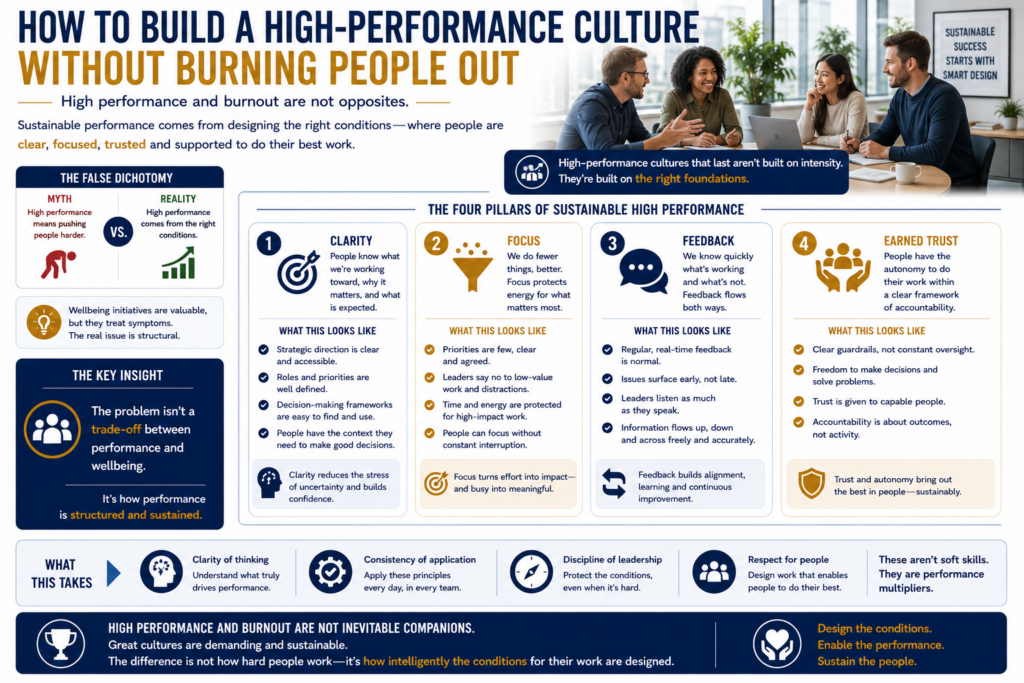
The organisations that build genuinely high-performance cultures without burning their people out share a number of characteristics that are worth examining closely – because they suggest that the problem is not a trade-off between performance and wellbeing, but a question of how performance is structured and sustained.
The first characteristic is clarity. In high-performance cultures that sustain themselves over time, people understand clearly what they are working toward, why it matters, and what specifically is being asked of them. This sounds obvious. It is, in practice, surprisingly rare. The absence of clarity generates a specific kind of stress – the stress of uncertainty, of not knowing whether what you are doing is right, of having to navigate ambiguity without sufficient grounding. Organisations that invest in clarity – in making strategic direction, performance expectations, and decision-making frameworks genuinely accessible – reduce this kind of stress significantly.
The second characteristic is focus. Burnout is rarely caused by working hard on things that matter. It is most commonly caused by working hard on too many things simultaneously, few of which feel genuinely important. The proliferation of initiatives, priorities, and demands that characterises many growing organisations creates a condition where people are always busy and rarely effective – which is one of the most demoralising experiences in professional life.
High-performance cultures that sustain themselves have learned to say no as a leadership discipline. Not no to people, but no to the accumulation of priorities that makes it impossible for anyone to do anything well. The ability to identify what matters most and protect people’s capacity to focus on it is one of the most valuable and underrated leadership skills.
The third characteristic is feedback. In cultures where performance is genuinely high, people know quickly when something is working and when it is not. Feedback is not an annual event. It is a continuous, normalised part of how the organisation operates. And it flows in both directions – leaders receive as well as give, and the information that travels upward is as accurate and unfiltered as the information that travels down.
The fourth characteristic is what might be called earned trust – the condition in which people are given genuine autonomy to do their work rather than being monitored, second-guessed, or required to justify every decision. Autonomy is not the absence of accountability. It is the presence of a clear framework within which people can make decisions and take actions without constant supervision. Organisations that extend genuine autonomy to capable people get more from those people – and ask less of them in the process.
None of these characteristics require extraordinary resources or unusual leadership talent. They require clarity of thinking, consistency of application, and a willingness to treat the conditions of performance as seriously as the results.
High performance and burnout are not inevitable companions. The evidence is clear that organisations can build cultures that are genuinely demanding and genuinely sustainable at the same time. The difference is not in how hard people work. It is in how intelligently the conditions for their work are designed.
Organisational intelligence starts with better understanding.
Interested in early platform access or receiving insights on leadership, performance and contextual intelligence – along with updates on the Levare platform.