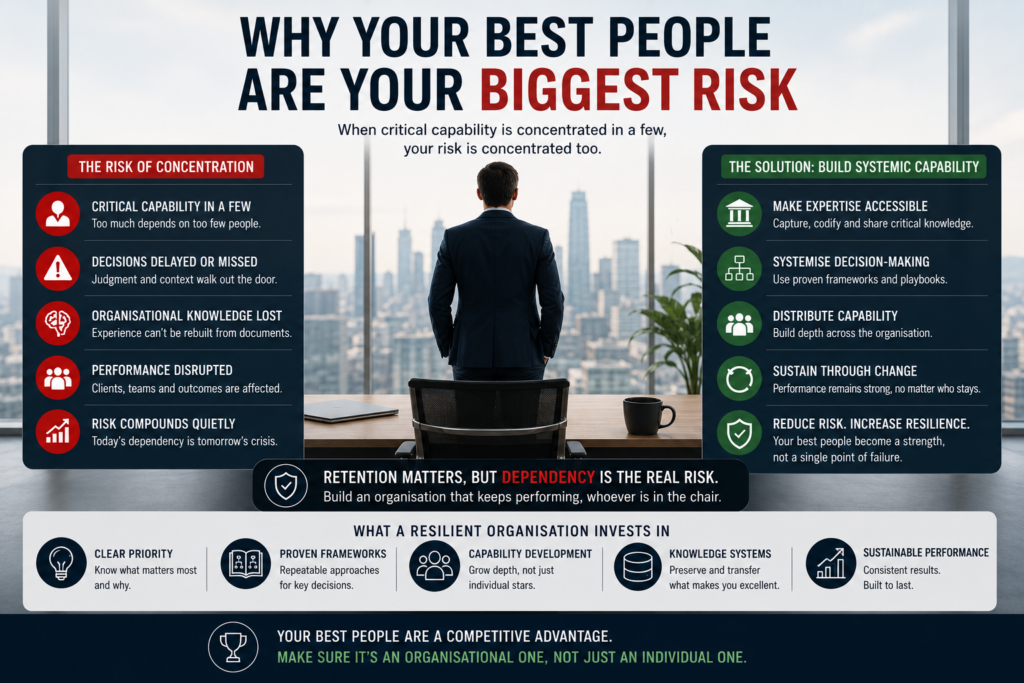
Your best people are leaving. Not today – but the conditions that will cause them to leave are already present in most organisations. And the organisations that are not actively building the alternative are carrying a risk that compounds quietly until it becomes acute.
I do not mean this as hyperbole. I mean it as an observation drawn from two decades of working with leadership teams on strategy execution and organisational performance. The single most consistent source of performance vulnerability I have observed in that time is the concentration of critical capability in a small number of people who have not been given sufficient reason to stay, sufficient room to grow, or sufficient access to the kind of work that sustains engagement over the long term.
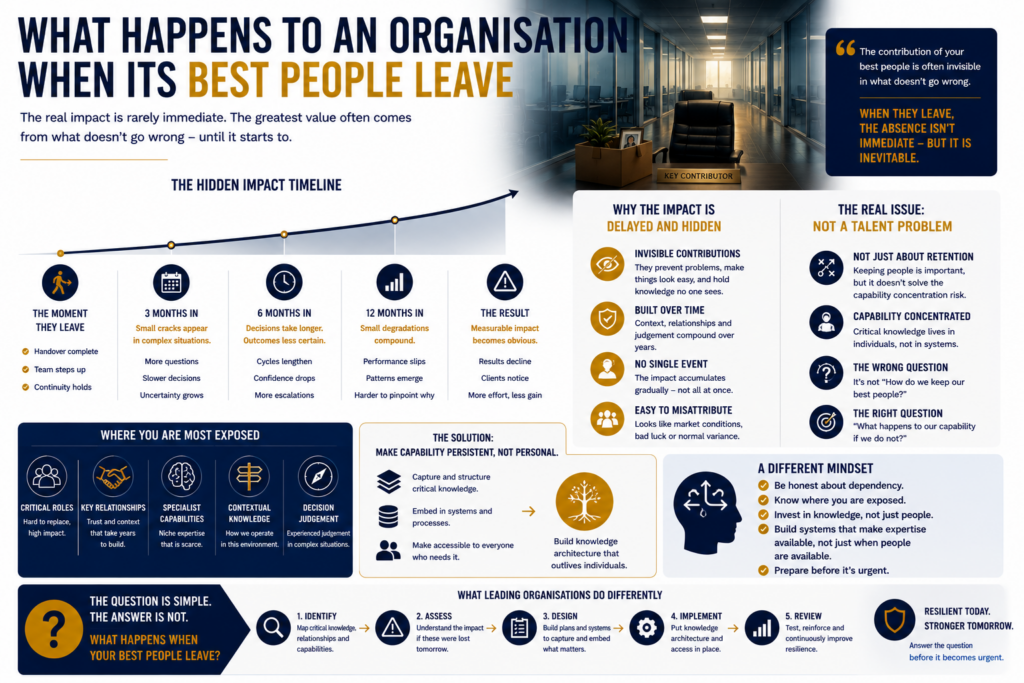
The loss of these people is costly in ways that are well understood. Replacement costs are significant. Productivity loss during transitions is real. Client relationships are disrupted. Team cohesion is affected. These are the visible costs, and they are large enough that most organisations take them seriously.
The less visible costs are larger. They are the decisions that are not made because the person who would have made them well has moved on. The opportunities that are not identified because the pattern recognition that would have spotted them has left the building. The organisational knowledge that has been lost and cannot be reconstructed from documentation alone – the contextual, experience-based understanding of how to operate effectively in this specific organisation, with these specific clients, in these specific market conditions.
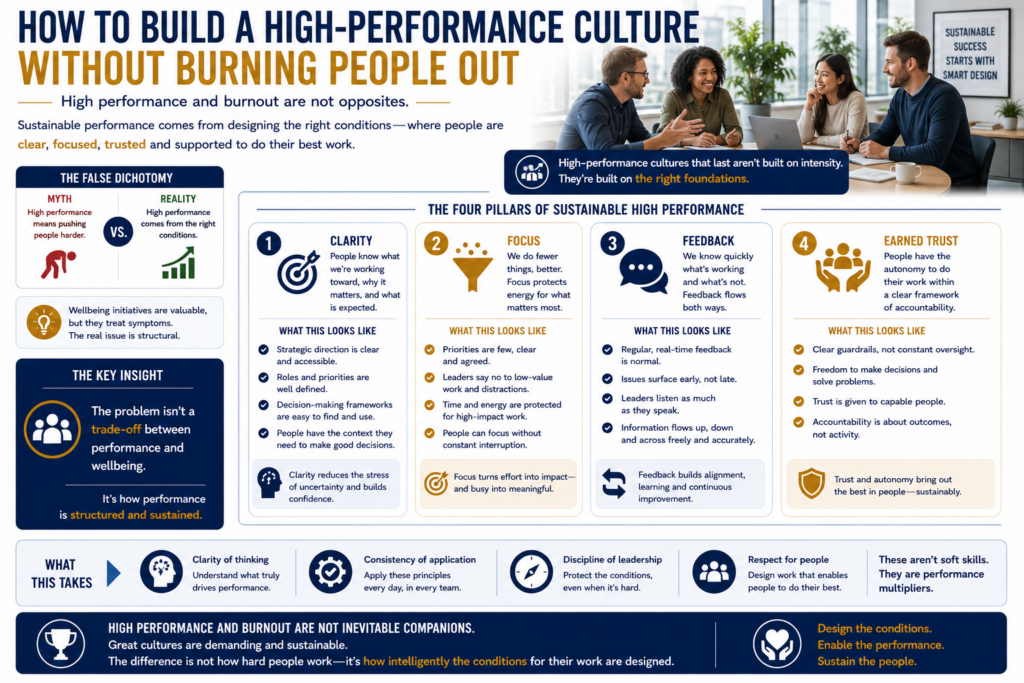
The question of how to retain your best people has been extensively studied. The answers are well known: competitive compensation, meaningful work, development opportunity, quality of leadership, culture, flexibility. These matter. And they are necessary but not sufficient conditions for addressing the underlying problem.
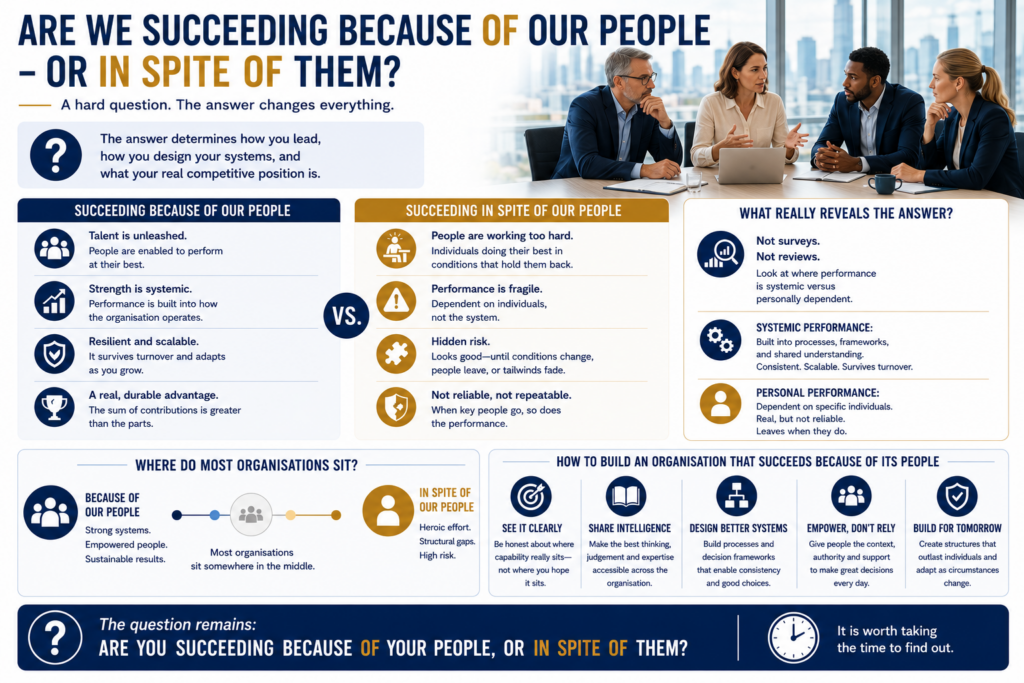
The underlying problem is not primarily a retention problem. It is a dependency problem. The real issue is not that your best people might leave. It is that the organisation has allowed itself to become dependent on their presence in ways that are structurally fragile.
Addressing the dependency problem requires a different kind of intervention from the retention strategies most organisations default to. It requires asking, explicitly, what would happen if your three most capable people left in the next six months – and being honest about the answer.
In most organisations, the honest answer is uncomfortable. The departure of three people from a specific set of roles would have a disproportionate impact on performance – not because the remaining team is inadequate, but because the critical knowledge, the key relationships, and the most complex decision-making are concentrated in those individuals to a degree that the organisation has not fully acknowledged.
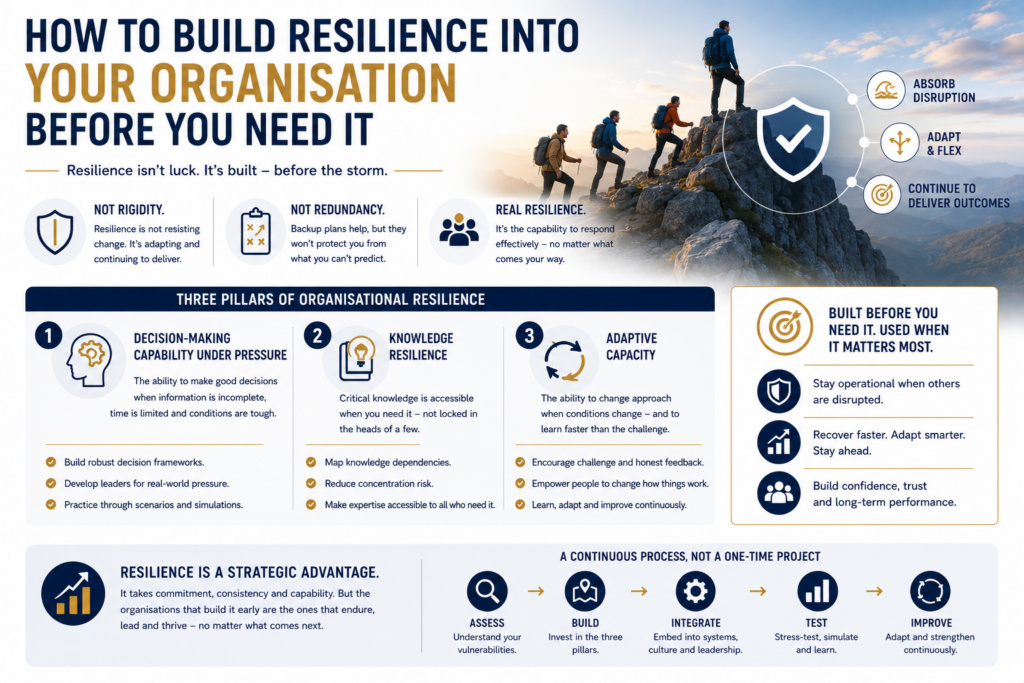
Acknowledging it is the first step. The second is investing in making the most critical capabilities more systemic – ensuring that the expertise that is currently personal becomes, to the greatest possible extent, institutional. Not by trying to replace the individuals, but by creating mechanisms that make their knowledge accessible to the organisation independently of their presence.
This investment is not a substitute for retention. Retaining your best people remains important. But it changes the risk profile of the organisation in a way that retention alone cannot – because it means that if, despite your best efforts, those people do leave, the organisation retains more of what made them valuable than it would otherwise.
The organisations that take this investment seriously are the ones that discover, when good people eventually do leave, that the impact is manageable – not because the people were less important than they thought, but because their most critical contributions had been made systemic before they went.
Organisational intelligence starts with better understanding.
Interested in early platform access or receiving insights on leadership, performance and contextual intelligence – along with updates on the Levare platform.